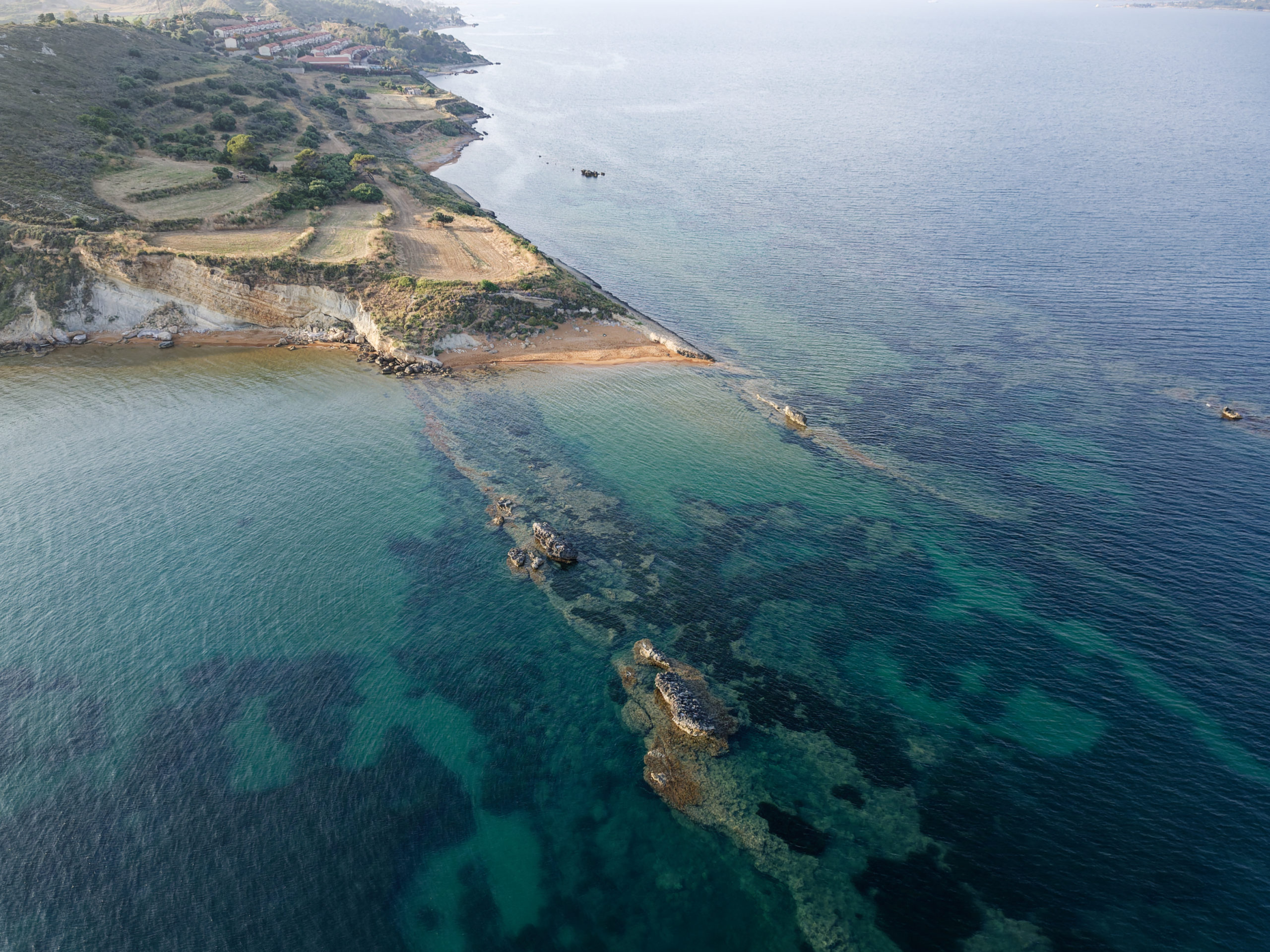

The sentinels of the Mediterranean (Italy & Greece, 2023 – 2025)
Turtles have roamed the oceans for hundreds of millions of years. In the coastal waters or the open sea of the Mediterranean, the survival of loggerhead (Caretta caretta) and green sea turtles (Chelonia mydas) is threatened by human activities. The Octopus Foundation has launched an innovative program to better understand these reptiles, in order to better protect them.
Turtles have roamed our planet’s oceans for hundreds of millions of years. Ancestors of today’s turtles were already present long before the dinosaurs ruled the Earth. Almost 65 million years after the sudden disappearance of large reptiles, sea turtles remained and thrived. Despite their brains’ size not bigger than our little finger, these animals are marvels of evolution with unique adaptive capacities. We have known about their existence since mankind began to sail our seas and oceans. Yet, their scientific study only started in the 1960s…
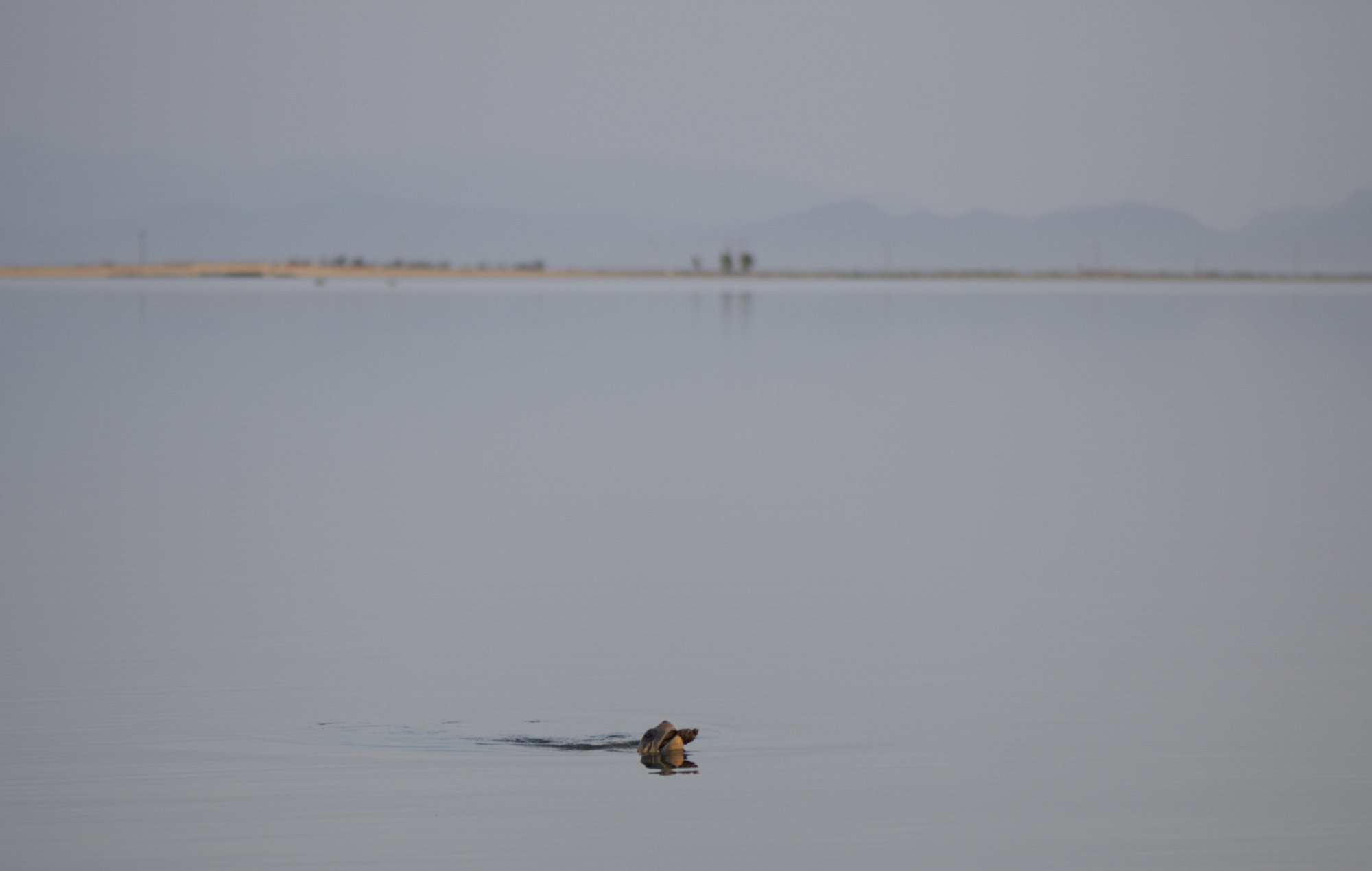 Despite decades of research, biologists now admit that they know the main threats to sea turtles but lack the tools to study and understand precisely how these exceptional animals function and behave. It is a question of finding pragmatic and effective solutions for their protection, which are often lacking.
This project has three objectives: to create a collaborative network of Mediterranean sea turtles specialists, to develop new open source research tools based on the biologists’ most immediate needs, and finally, to produce media aimed at raising the public’s awareness on this incredible creature.
Location

a) Collaborative research group
To better understand the turtle’s current complex situation, the Octopus Foundation thought it best to begin with the creation of a working group where five Italian and Greek specialists could work together.
> In Italy, Dr Paolo Casale (University of Pisa), Daniela Freggi (Lampedusa Care and Research Center) and Dr Antonio Di Bello (University of Bari) mainly study and treat Loggerhead turtles, usually injured by fishing gear, maritime traffic and drifting plastics (including abandoned fishing lines and nets).
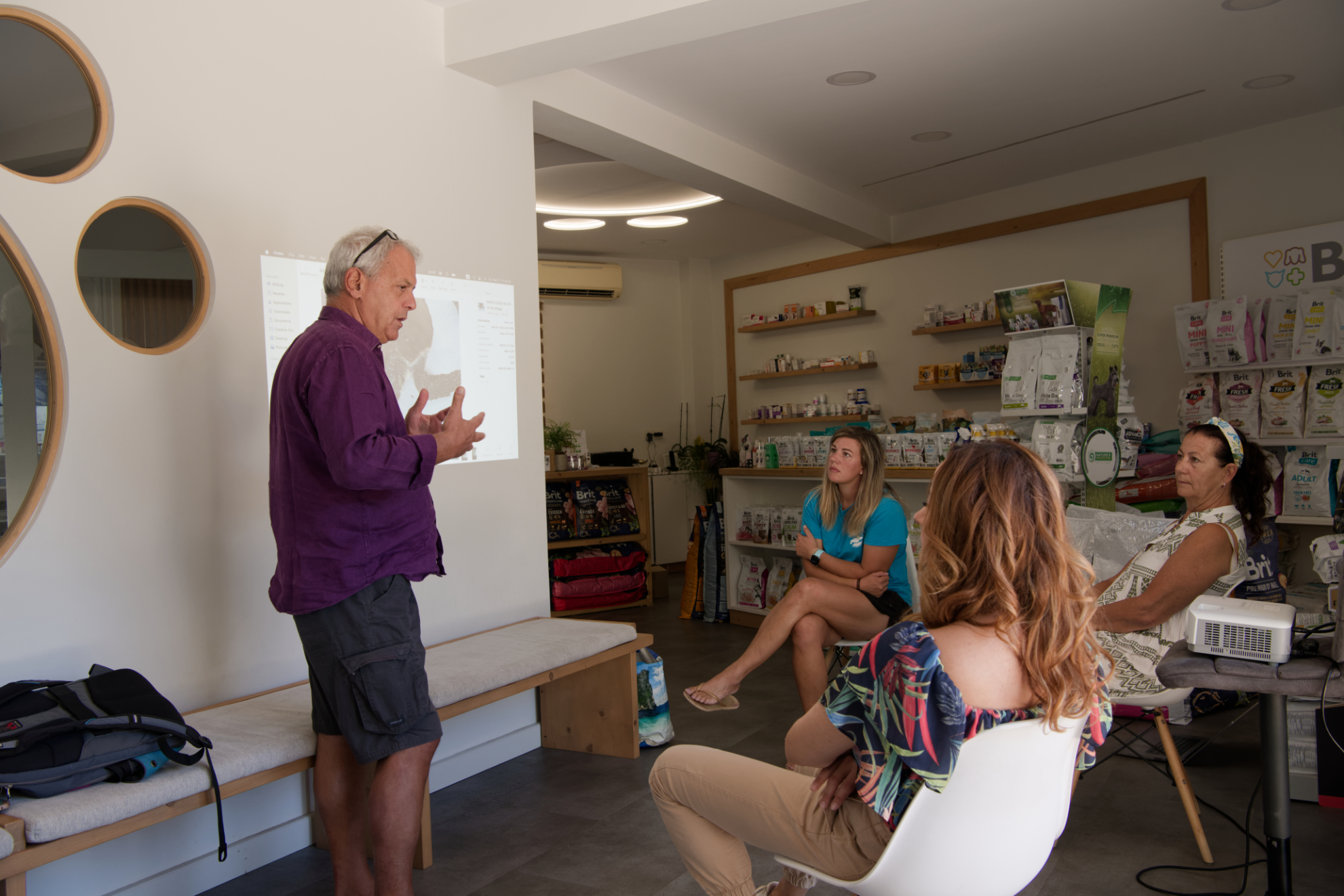 > In Greece, in the central Ionian Islands, Nikos Vallianos and Chanel Comis (Wildlife Sense) study and save turtle nests and adult turtles that come to breed and lay eggs. They are located in the south of the island of Kefalonia, where the animals are confronted with mass tourism, light pollution, and maritime traffic.
b) Innovative and open source tools
To help these biologists, the Octopus Foundation has taken many months to imagine and develop two new tailor-made and open source devices. Their objective is to gather innovative data:
> REMORA is a detachable camera that records POV (point of view) high definition footage for 12 hours. We hope it will help to provide a better understanding of how a turtle feeds, rests, interacts with other marine species, or is exposed to threats linked to human activities. The REMORA detaches from its wooden support, floats and is recoverable. It costs less than 2000 Euros a piece.
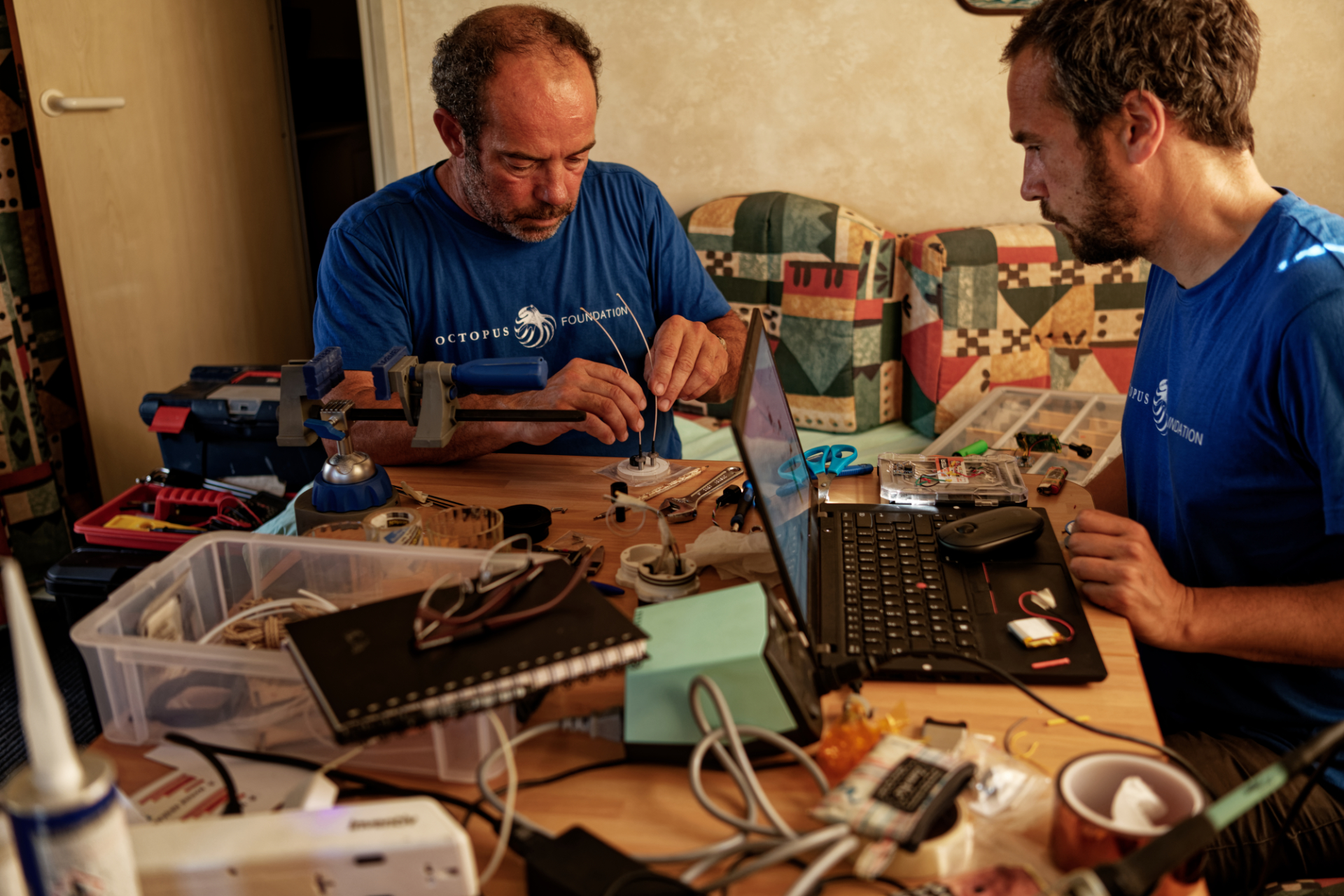 > Temperature and humidity level are two crucial parameters for the proper development of eggs in a sea turtle nest. The DUNEBOX is an autonomous monitoring kit (recharged by solar energy) and connected (to the 3G/4G telephone network) which allows remote and live monitoring of the evolution of several parameters (underground camera, temperature sensor) during the entire development period of the eggs of a displaced turtle nest, because it was laid in a dangerous area (tourism infrastructure, proximity to the sea, network of plant roots, etc.). The DUNE BOX total equipment cost is a little less than 2000 Euros.
c) Awareness media
For this project, the Octopus Foundation chose to produce a 52-minute video documentary, presenting the latest scientific discoveries on the species, and including the results of the new tools that are the REMORA and the DUNE BOX. Thomas Delorme (Rewild Production – Octopus Foundation) is the director of this documentary.
Antoine Bugeon, cartoonist for the Octopus Foundation, is working on the creation of a 60-page comic strip, presenting the two species of Mediterranean turtles (Loggerhead and green turtles), their scientific study and the Lampedusa care center.
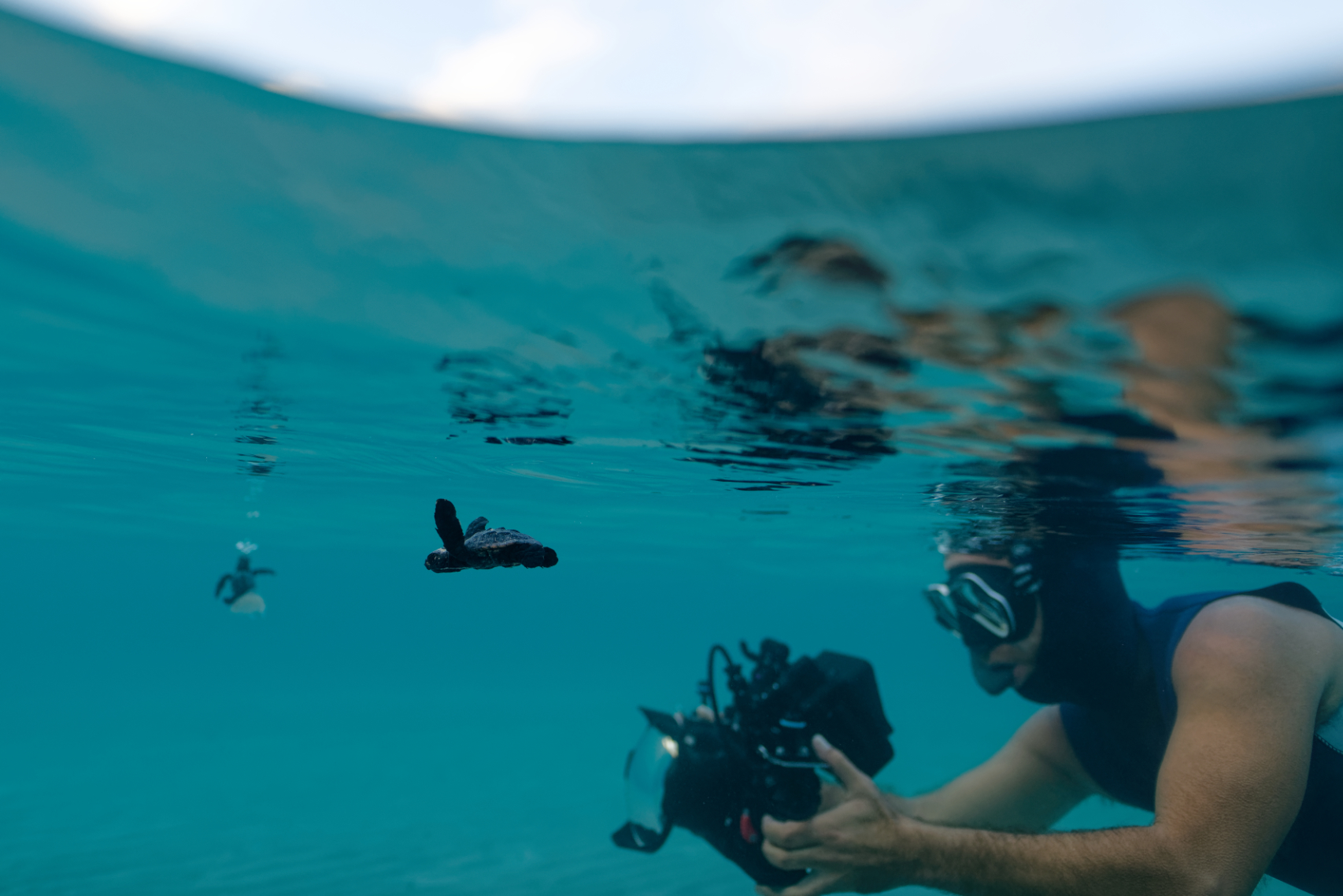
Location
June 2025 field mission
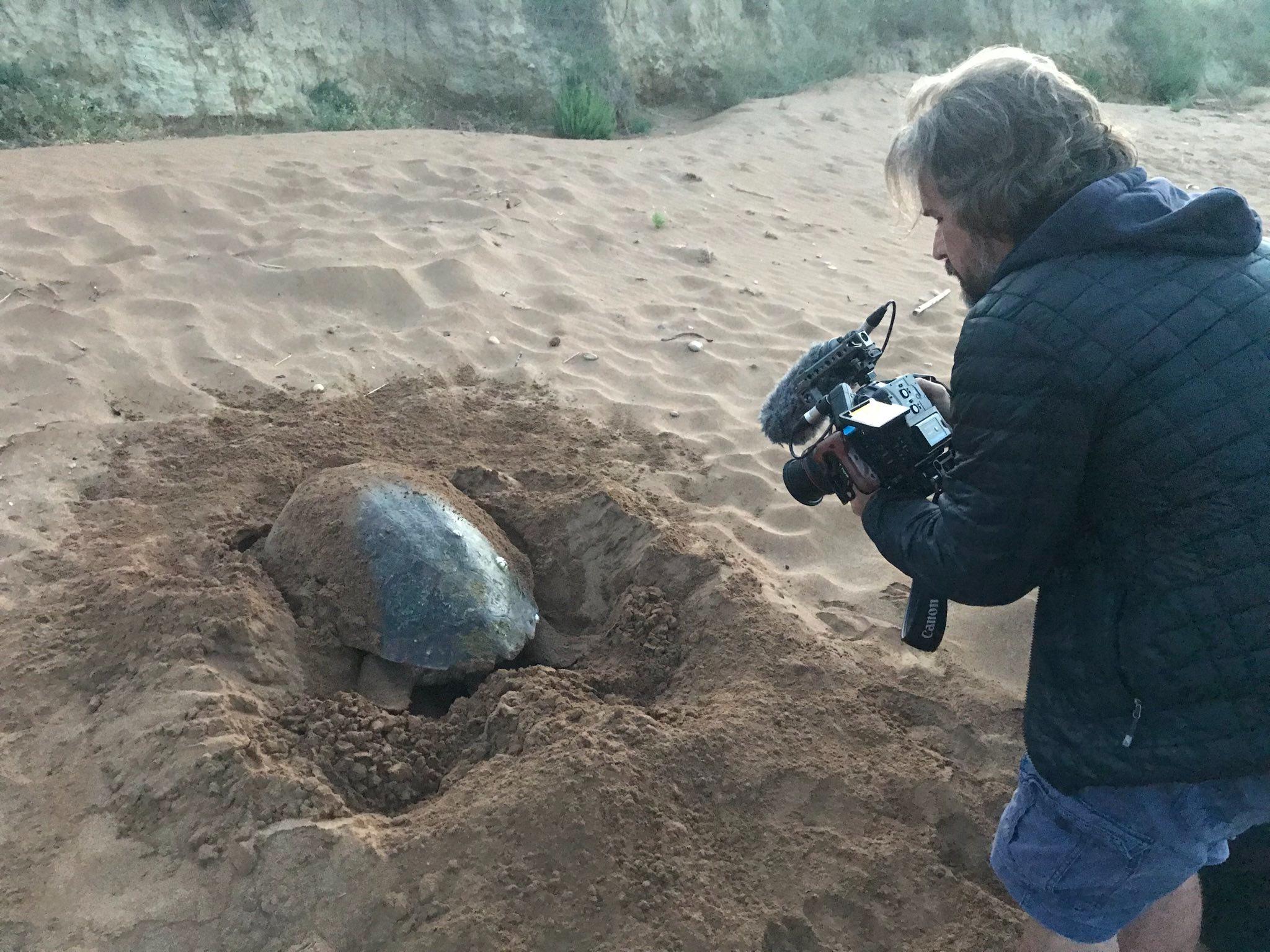
In June 2025, we returned to Greece for a field mission on the island of Kefalonia. The objective was to take advantage of the only time of year when adult female turtles get out of the water. It’s nesting season, and usually the marine reptiles dig the nest and lay their eggs at night. At the end of this tiring process, which can last up to two hours, just before the turtle is ready to head back out to the sea, the Octopus team quickly attached the REMORA V2 on two individuals weighing over 35 kg.
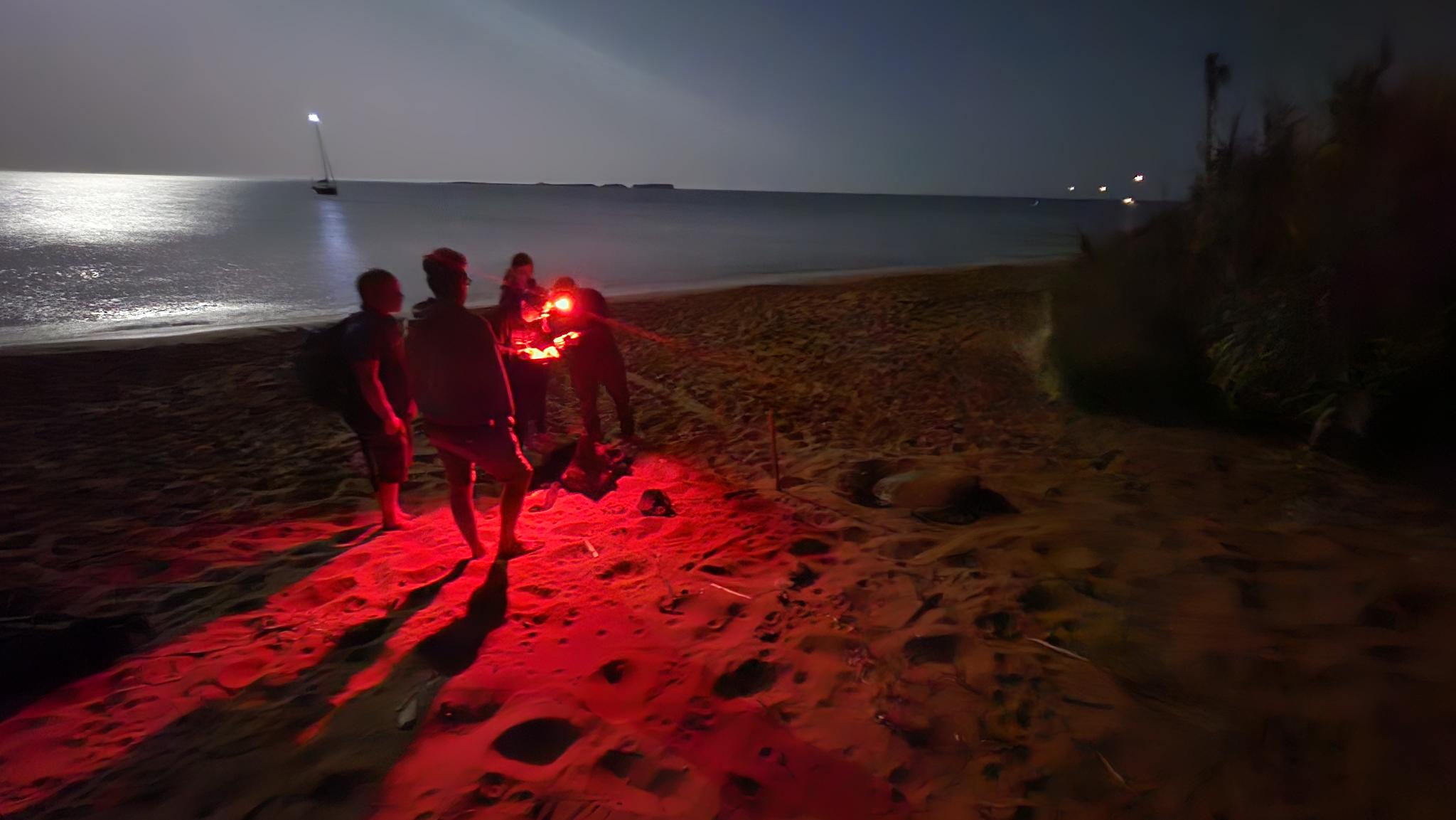
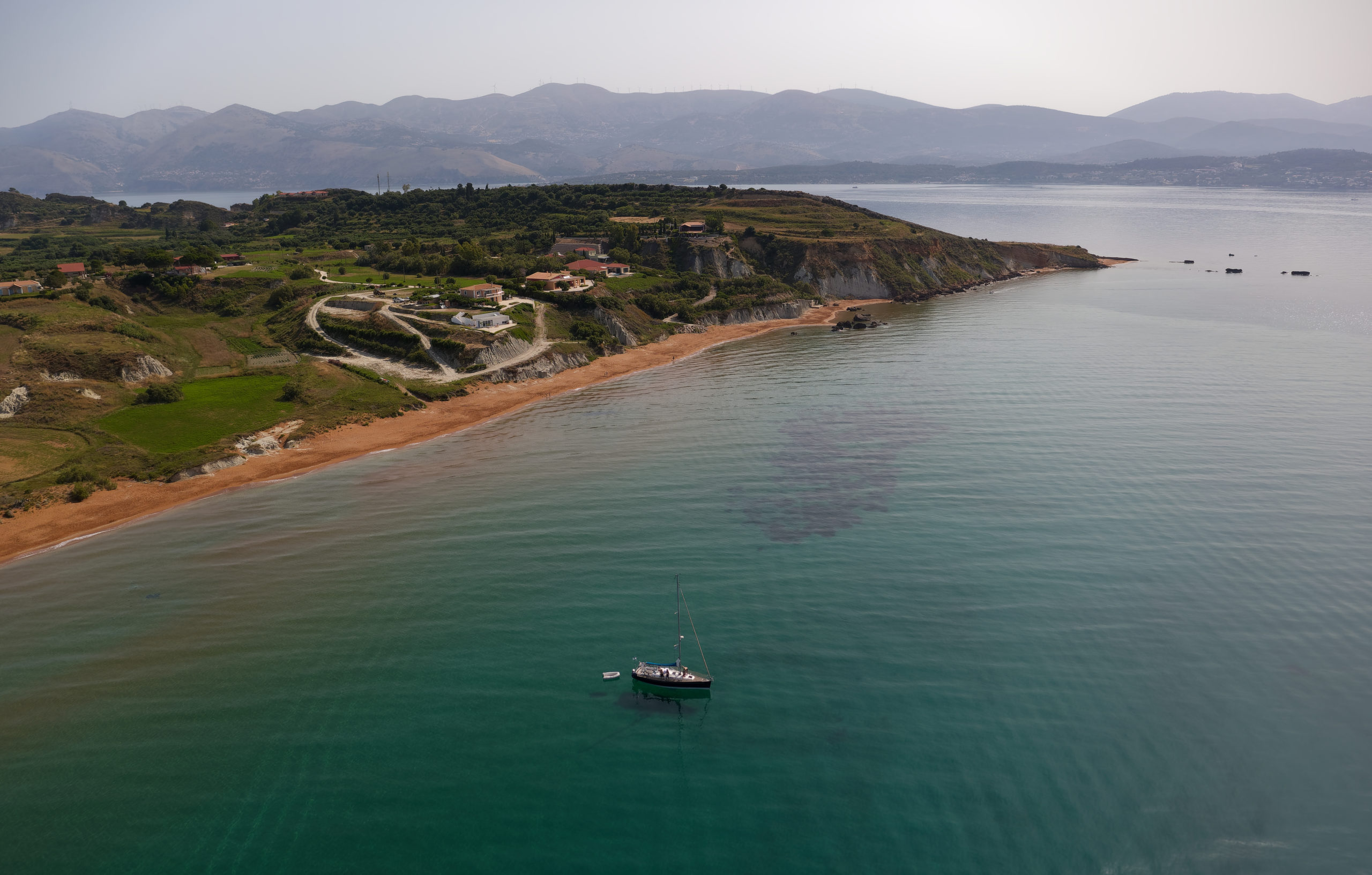
his mission took place between Wednesday, June 4th and Wednesday, June 18th, 2025, with a team consisting of four members of the Octopus Foundation, the Foundation’s sailboat based on the neighboring island of Lefkas (for the recovery of REMORAs), and the two REMORA V2 units (units 6 and 7). This mission was also made possible thanks to the collaboration of the Greek team from the NGO Wildlife Sense, which patrols the beaches of southern Kefalonia every night from May to September to protect turtle nests.
Of the six nights of the mission during which the Octopus team was anchored off the nesting beach, two actually allowed the deployment of the REMORA V2. We were able to attach the REMORA on the turtle named “Marilyn” on the night of June 9, and on the turtle named “Knicks” on June 13, 2025.
This mission also aimed to transfer a second monitoring kit for the nests of endangered turtles to Wildlife Sense, enabling them to track egg development during the approximately 55-day maturation period. The Wildlife Sense team will therefore be able to monitor two nests simultaneously in 2026.
Location
1) REMORA
The REMORA is a tool designed to better understand the daily life of sea turtles in the open sea.
Biologists need a way to record key life moments, in order to study how a turtle swims, rests, feeds or interacts with other marine species. It also gives an opportunity to better understand the nature and extent of the threats (natural and human related) they face.
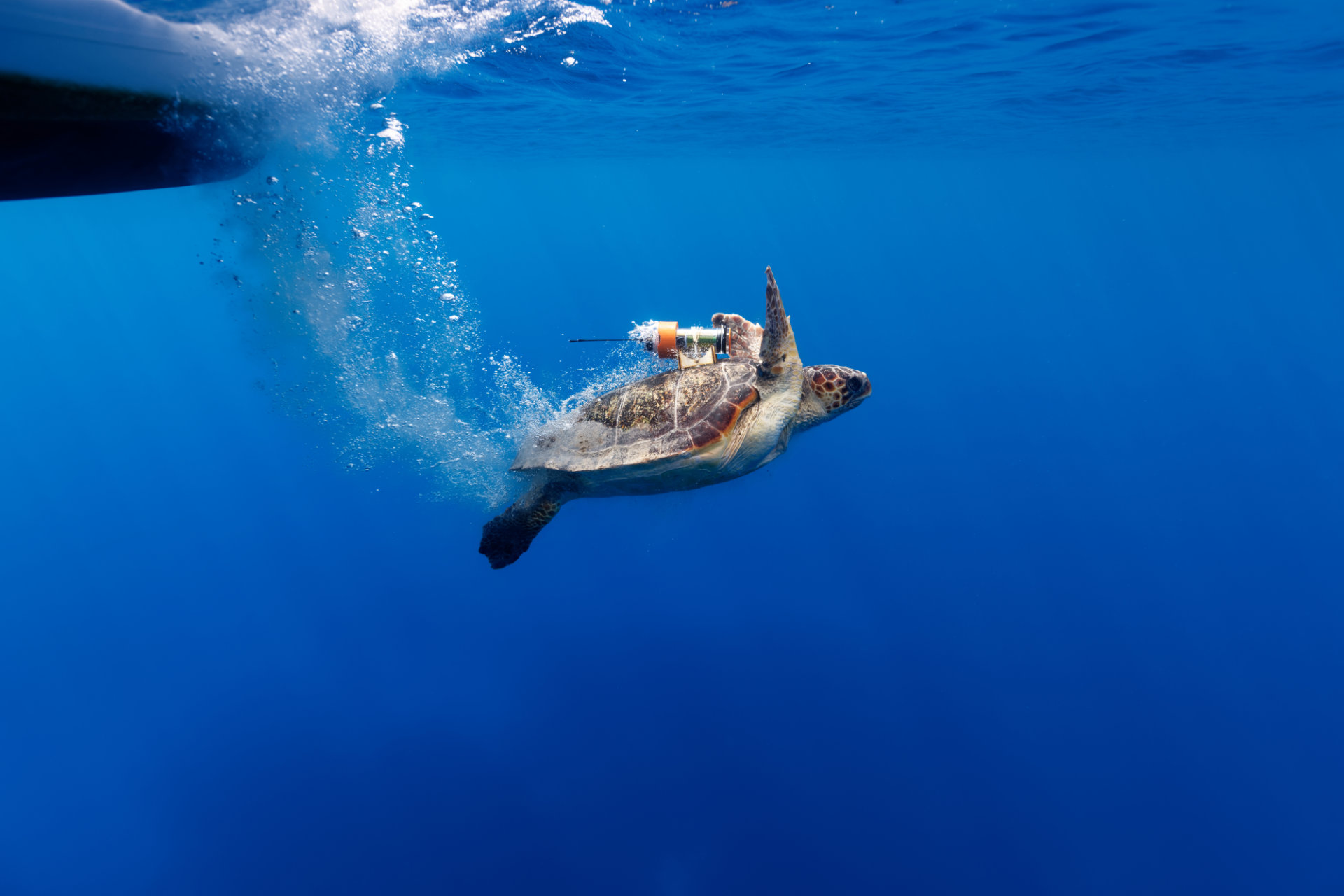
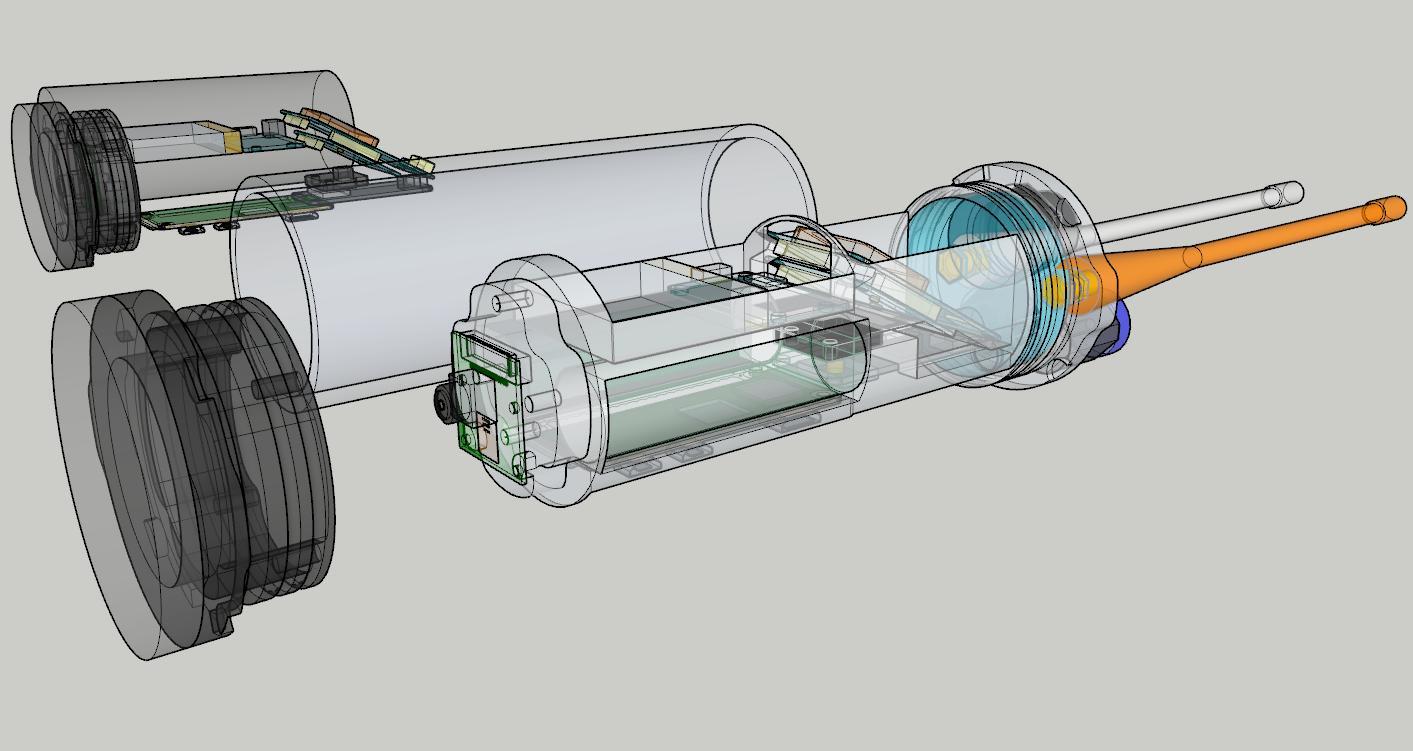
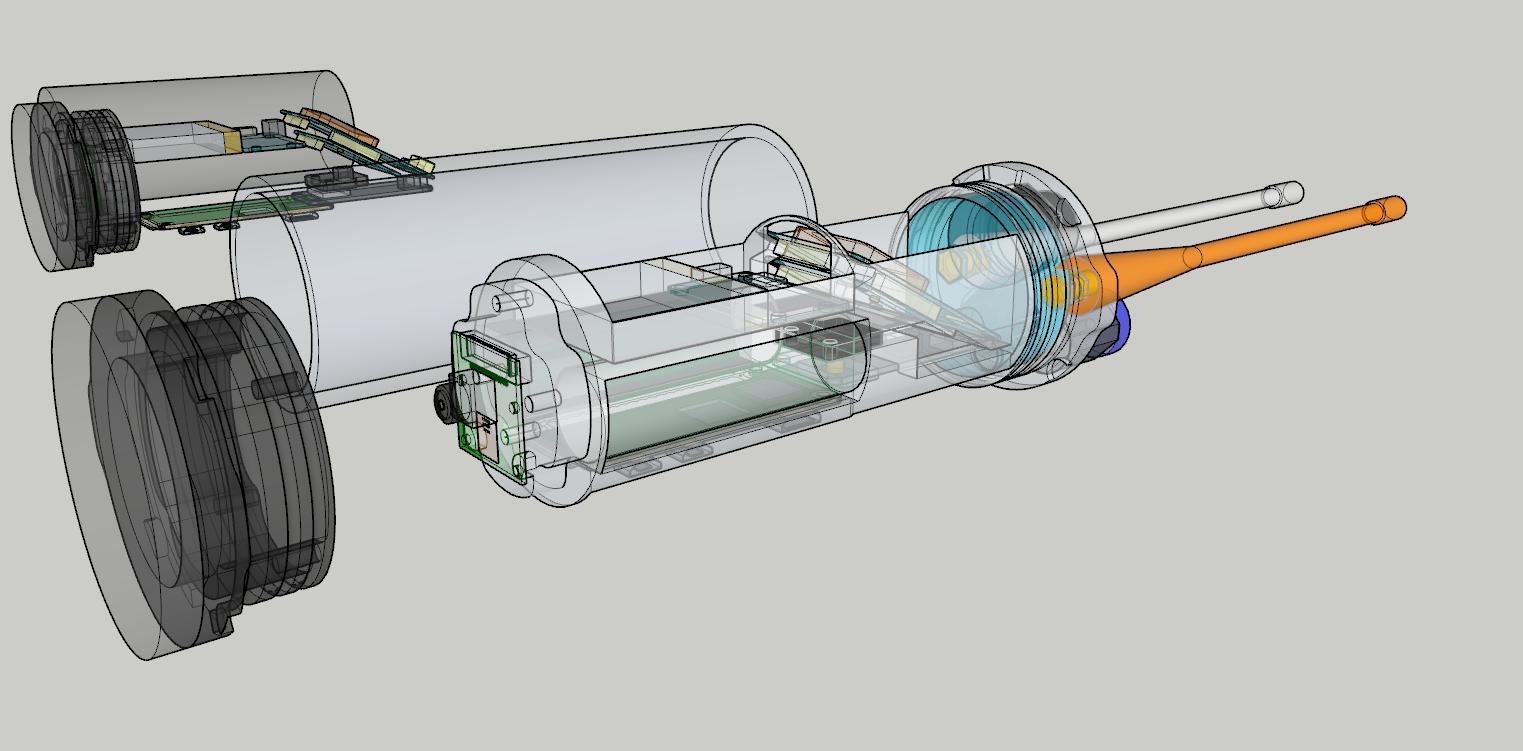
In the very beginning, the technical team of the Octopus Foundation was faced with the project’s biggest obstacles: the REMORA was to be fitted with the smallest of cameras capable of filming in high definition the front of the animal (angle of minimum 90°). Alongside the images, the turtles every movements were to be recorded by a motion sensor and pressure sensor. All of the electronics had to be protected by a waterproof enclosure capable of withstanding the pressure exerted by sea water at a depth of 150 meters. This casing should also allow access to the inside for repairs or upgrade. The device was to be attached temporarily to the turtle’s shell in a way that allows a release when desired, after approximately 12 hours. And once back at the surface in the open sea, a communication module needs to ping its position in order to be found again. The total weight of the REMORA and its support must not exceed 600 grams, i.e. the maximum weight of a device strapped to a 20 kg turtle. Finally, the cost of all the materials for the device must not exceed 2,000 Euros.
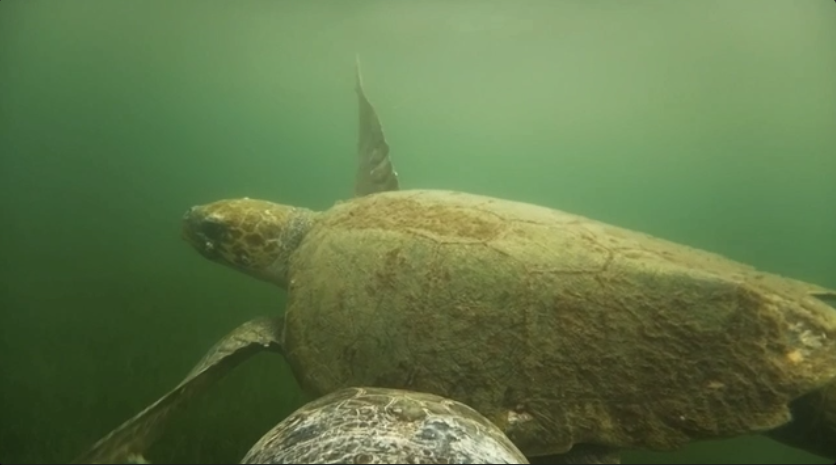
 Regarding the camera, we chose to film non-stop for 12 hours, from 8:00 a.m. to 8:00 p.m. where there should be enough natural light to get good quality footage. In theory, it should be possible to record for 24 hours, or even 36 hours, by stopping the recording during night time.
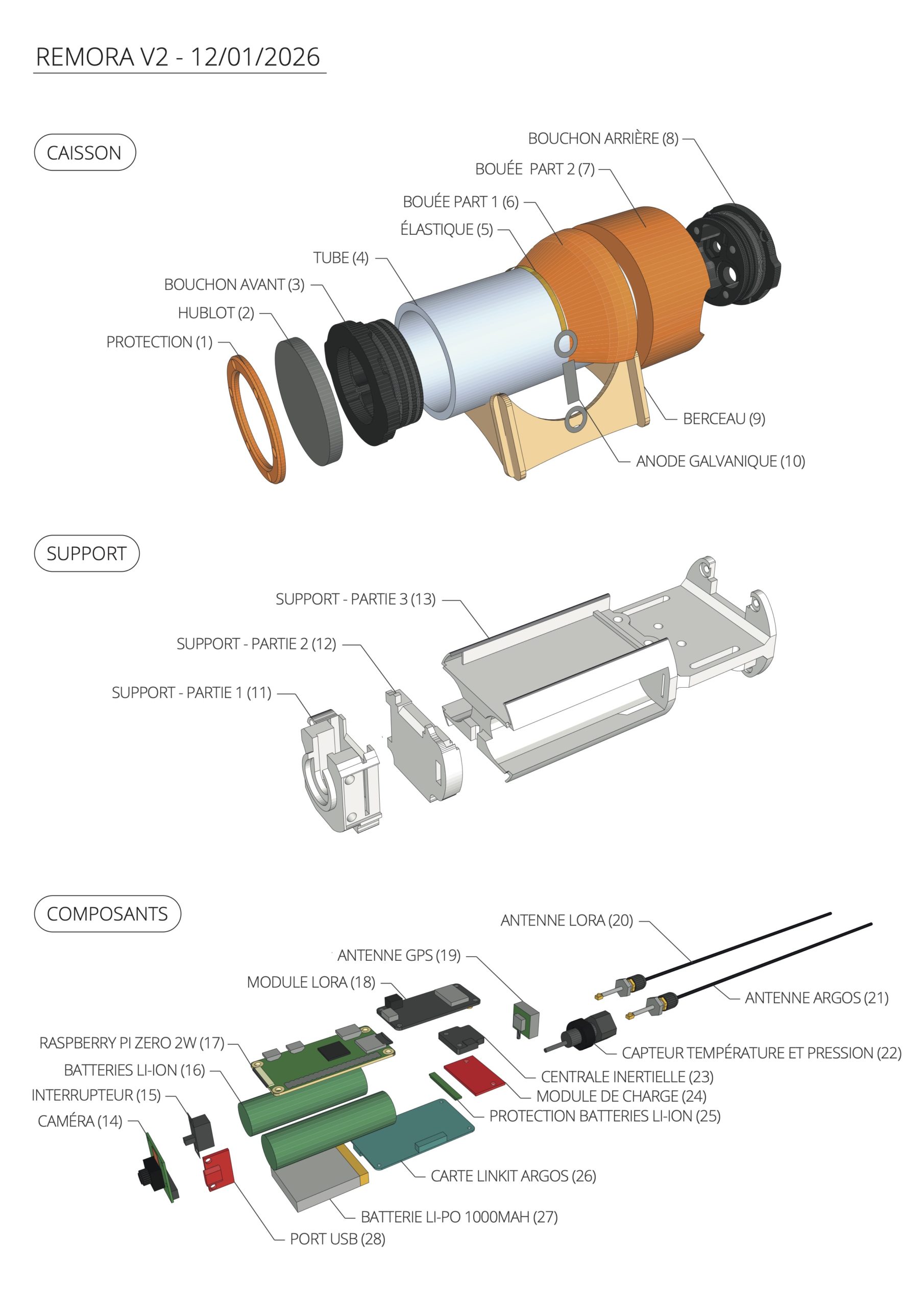
For the waterproof box, our initial tests begun with an acrylic tube 15 cm long and 5 cm in diameter (by BlueRobotics). Each end of the tube is fitted with a cap made of a piece of anodized aluminum and an acrylic disc in which we can drill the desired holes. This casing is theoretically waterproof to 200 meters below the surface.
To record all of the data, the REMORA is equipped with a Raspberry Pi Zero 2W. It is a very small computer with the processing power capable of operating the camera (Raspberry Pi Camera V3 wide – 1920*1080 pixels 25fps) as well as the motion and pressure sensors. The pressure is obtained by a small sensor out of the casing, next to the antennas. The “data” part of the REMORA is powered by two 3.7v Lithium Ion batteries of 3000 mAh each, so a total of 6000 mAh.
 For the “communication” part, two modules were chosen to track the REMORA once it has surfaced at the end of the 12 hours of data recording. The first module is the CLS Linkit Core board, which allows us to obtain approximate positions (using the Doppler effect of satellite movement) to within one or two kilometers, as well as a precise position thanks to the remote GPS antenna located in the cap. The idea is that these positions will indicate that the beacon has indeed surfaced, and its approximate location.
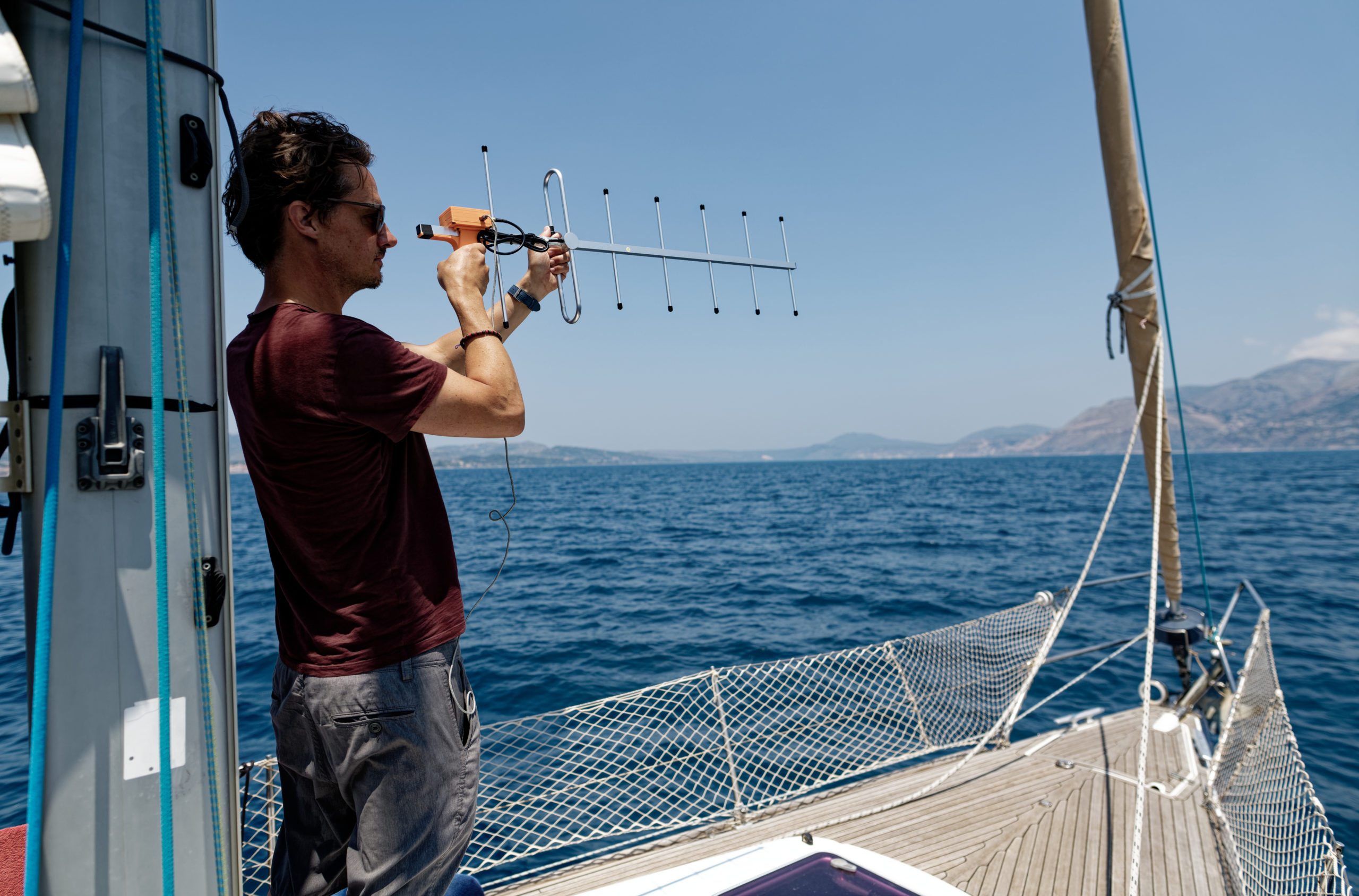
Once we took the boat out in the general area, we use the second module which is a LoRa transmitter. It gives a much more precise location, but can’t transmit far away. Within a perimeter of approximately 2 km, we use a directional antenna with its receiver, allowing us to capture the sound emitted by the transmitter. The ARGOS and LoRa communication modules are powered by a single 3.7 V LiPo battery of 1000 mAh, allowing for up to 36 hours of continuous transmission. Each module sends its data via its own antenna, located on the back cap, next to the pressure sensor.
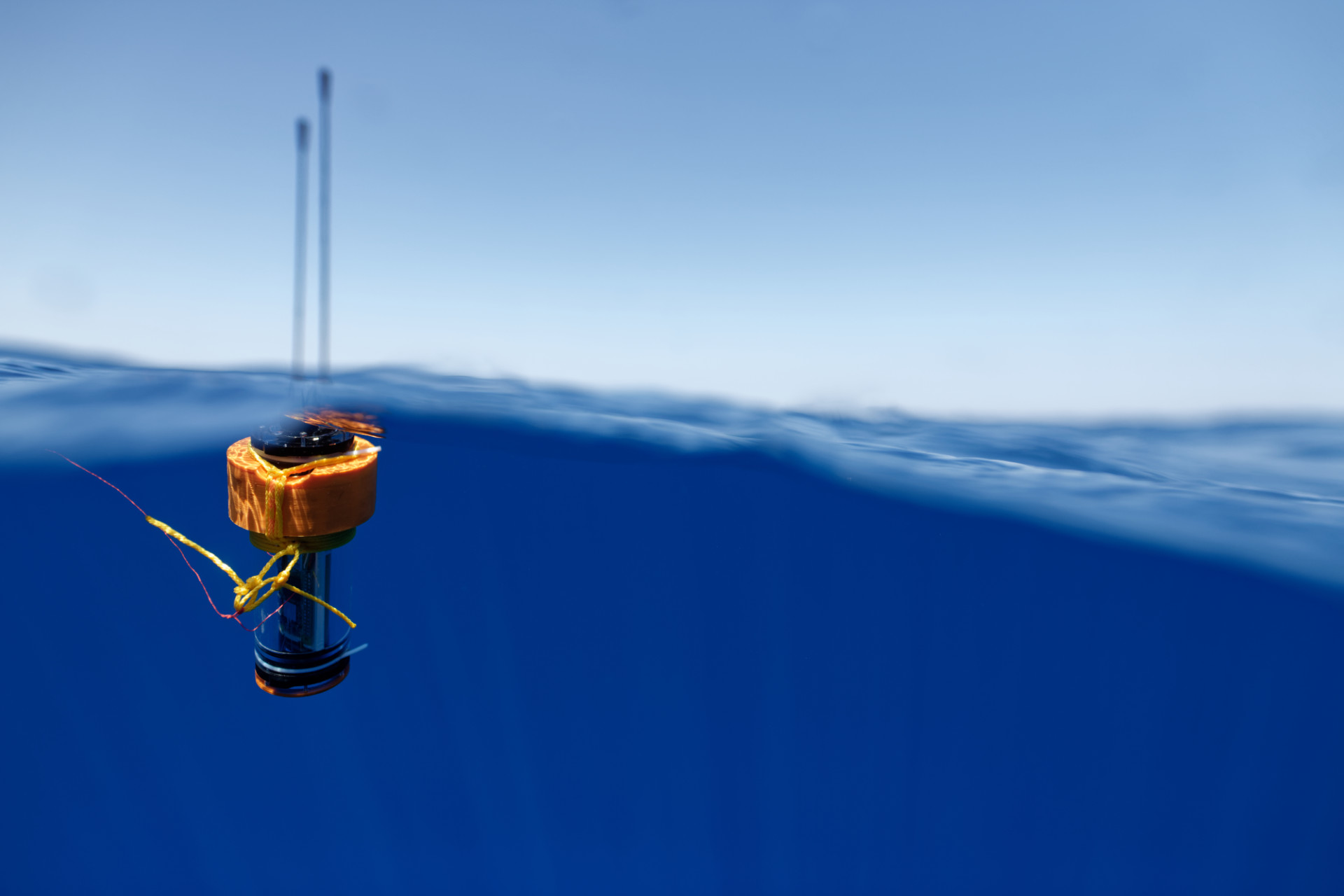 To allow the REMORA to float back to the surface once released, we designed a custom 3D printed buoy ring, in which we placed cubes of incompressible foam originally intended for ROVs. This foam can withstand the pressure exerted by water at depths of 1000 meters.
The REMORA is attached to a wooden support made of 3mm laser cut plywood. The inclination (5°, 10 ° or 15°) can be tailored to the turtle’s shell. This material is biodegradable, resistant, and at the same time light so that the turtle can easily get rid of it after a few days. Two strips of epoxy glue are used to fix this support to the turtle’s shell. All of it will be gone after a few days.
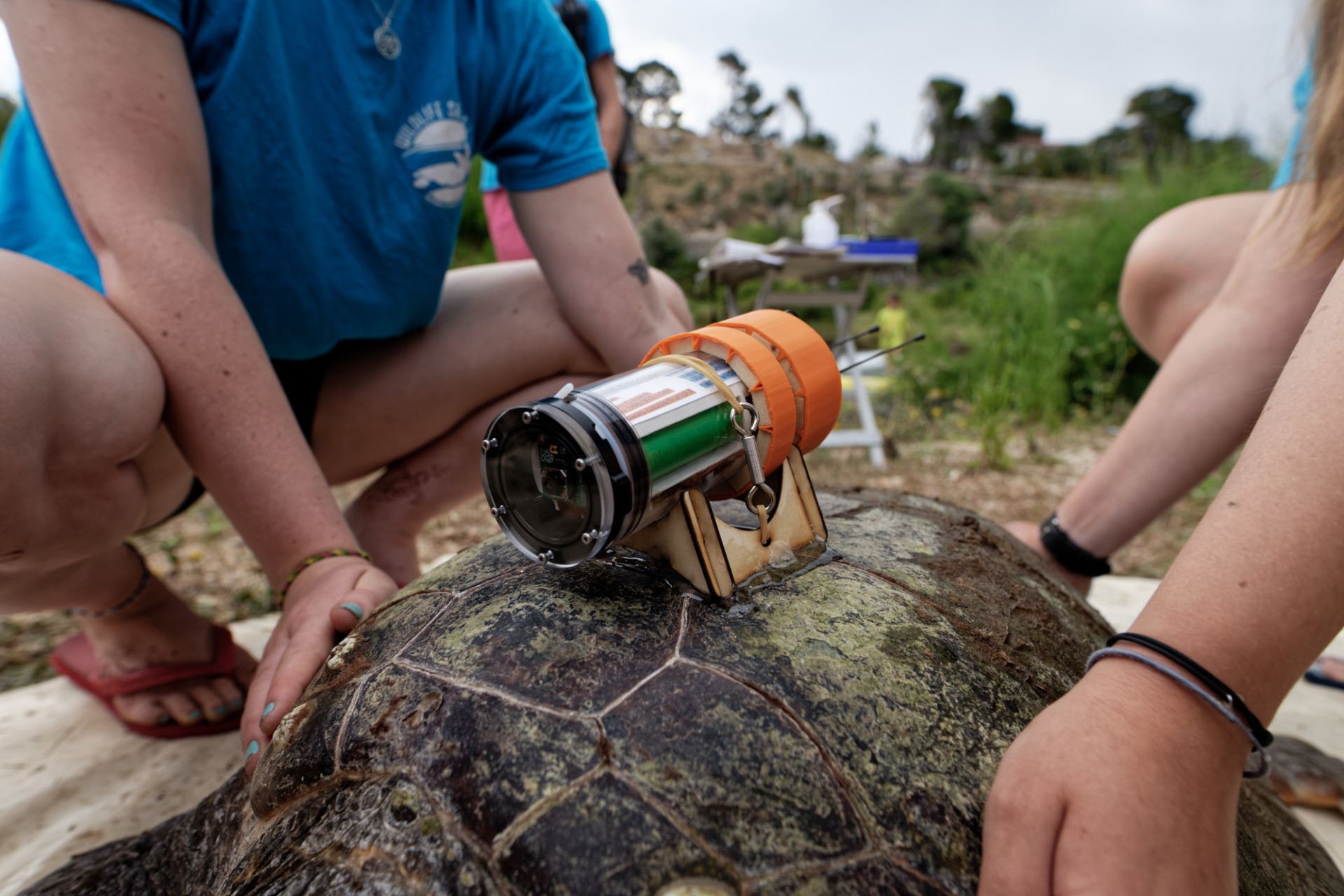 To attach the REMORA to its wooden support, we use a natural rubber band, tightened with a galvanic anode designed to dissolve in seawater through electrolysis. Given that these anodes are manufactured in the United States, with a certain salinity level, we tested them by simulating the average salinity level of the Mediterranean (37 grams of salt in a liter of water), which is significantly higher than in the Atlantic or in the Pacific. Thus, an anode of “1 day” for the Americans ended up being 11 hours for the Mediterranean. Which, for our first tests, proved ideal.
###
2) DUNE BOX
On the island of Kefalonia, in Greece, many turtles come each year to nest in the southern sandy shores. These beaches sometimes fail to become the safe incubator the fragile eggs need. The DUNE BOX has been designed to better understand why.
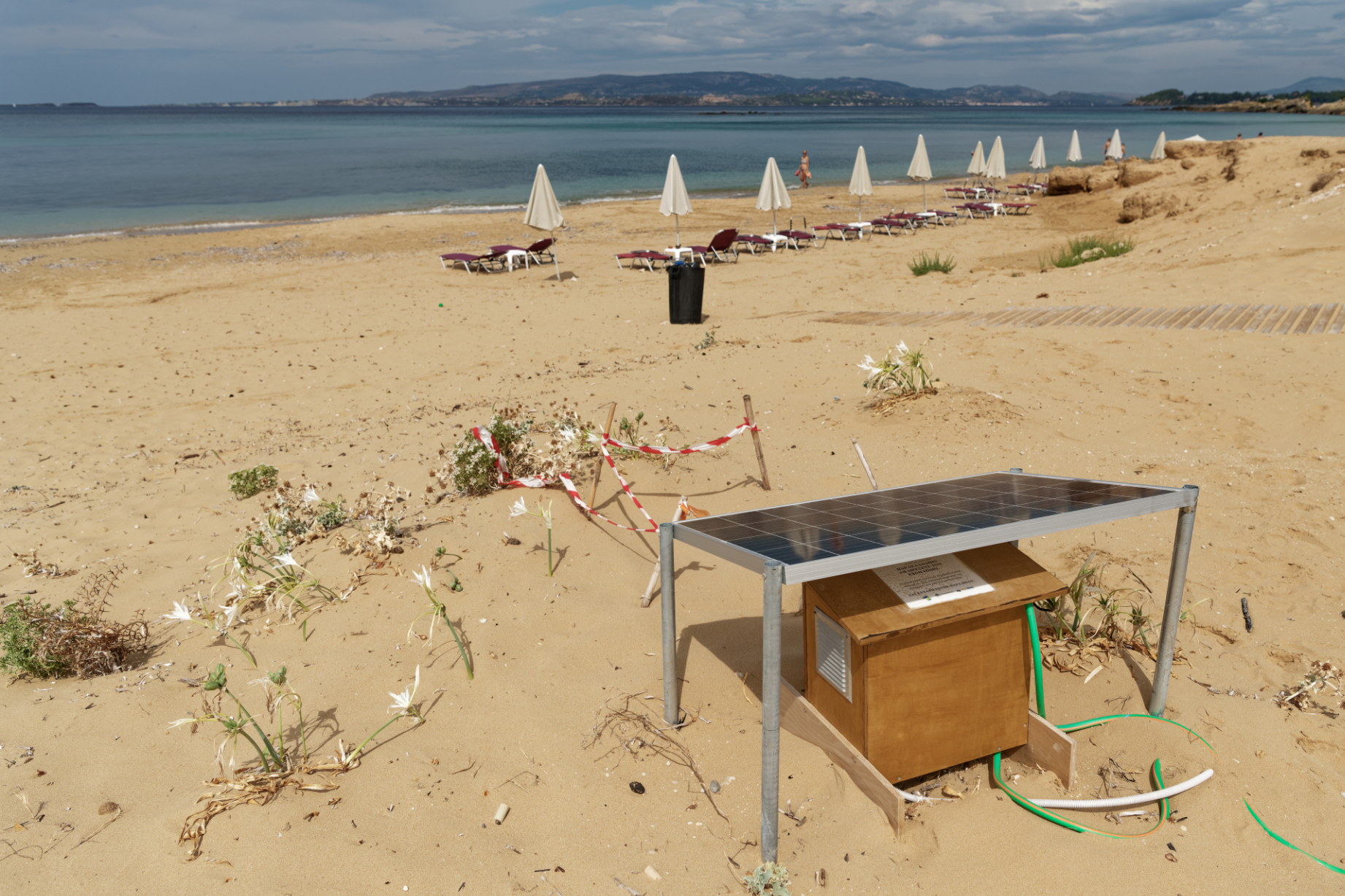
Throughout the nesting period (April-July), the volunteers from Greek NGO Wildlife Sense monitor various beaches on a daily basis. They record all of the new nests while assessing if they are at risk, and how to best protect them.
The majority of nests need no protection at all. Female sea turtles have ways to know where the beaches’ best spots are. They might try many times before making up their mind and getting it right. Unfortunately, for various reasons such as light pollution, construction and tourist infrastructures, some nests may be at risk or even doomed to fail. It might be the case for nests that are located too close to the sea for example, or where dune plants might grow and dry up the sand with their roots.
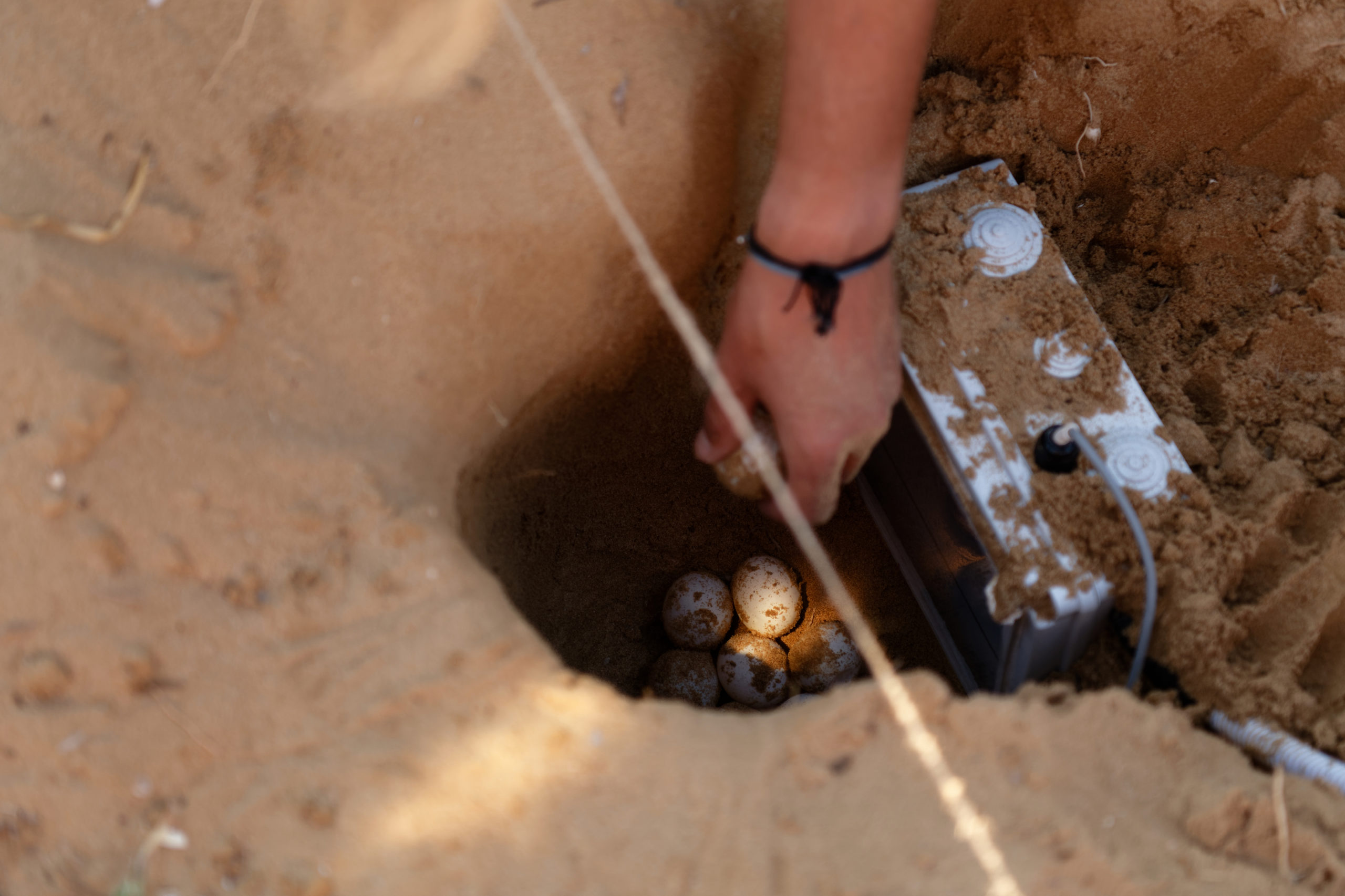 By following a very precise and strict protocol, and only for the nests that are considered fatally positioned, Wildlife Sense managers can decide to relocate the eggs. Here are just a few of the many aspects of this protocol: eggs can only be moved in the first 10 hours following laying; the exact dimensions and depths of the original nest are scrupulously followed for the relocated spot; the order and position of each egg is respected.
All of these parameters are crucial, reflecting the turtle’s choices, including the size of the grains of sand which will have an impact on the temperature and humidity level in the sand.
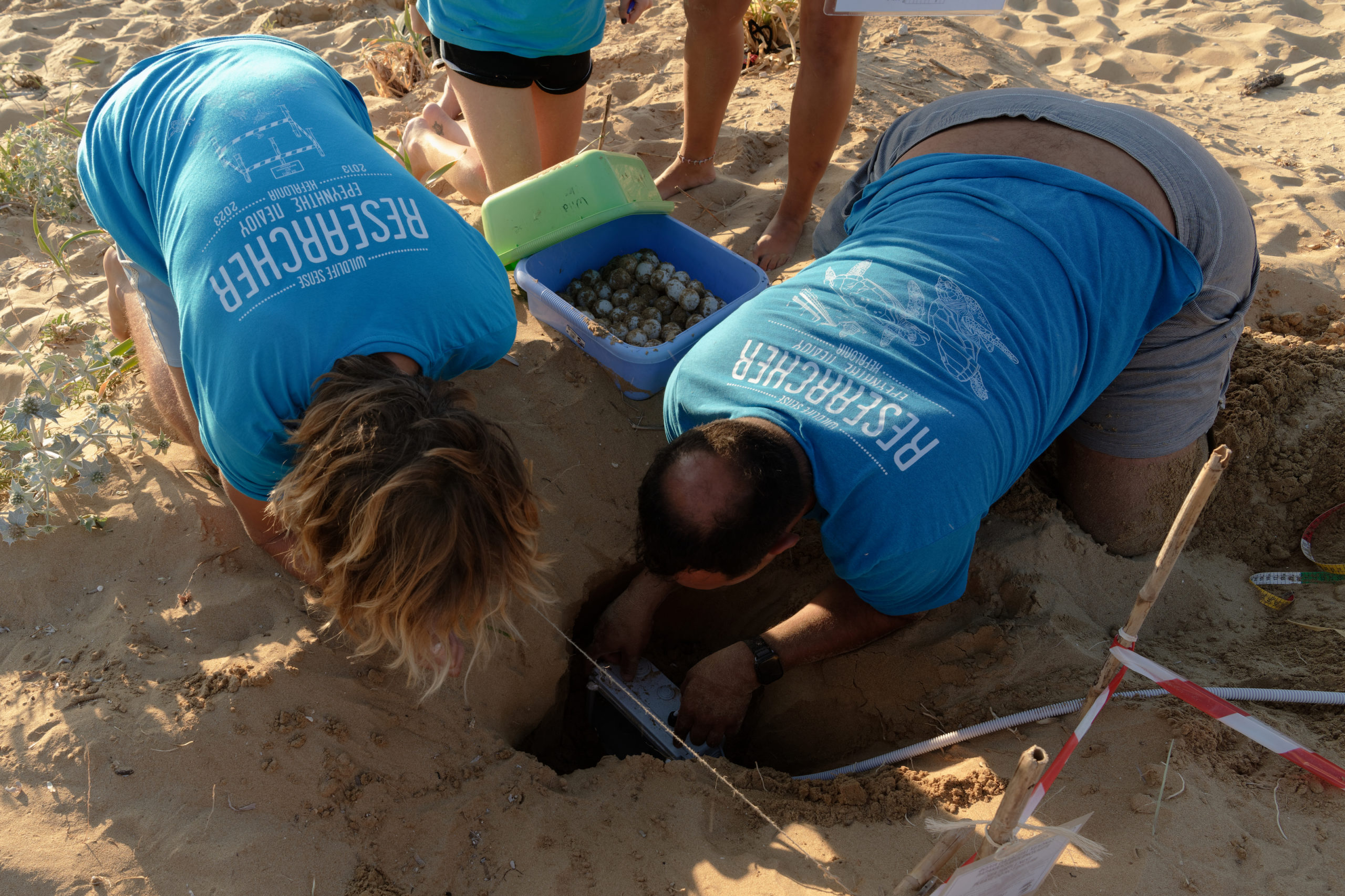 Keeping these aspects in mind, the technical team of the Octopus Foundation designed an electronic device capable of continuously monitoring the eggs during the two months it takes between laying and hatching, with as little disturbance as possible.
To do this, we started with something we know quite well: the monitoring kit for Mediterranean monk seals. It was originally developed in 2017, and then improved over the next five years. With a few modifications, we aimed at adapting it to sea turtle nests.
The kit is made up of four main elements: On the beach there is the wooden box containing the electronics and the battery (1), next to it is the solar panel (2). Buried in the sand and in front of the relocated nest is the small waterproof box containing the camera and a secondary microcomputer (3). A small cable is connected to the humidity and temperature sensor (4).

The device is designed to allow the monitoring of this relocated nest with the least amount of manipulation and disturbance to the fragile eggs. In this configuration, we started to record the data (1 photo, 1 temperature measurement, 1 humidity measurement) once every six hours, or four times per 24 hours. In the last days, where the activity was more intense, the frequency was increased up to one picture every minute.
Here is the operating procedure: On the beach, the 100W solar panel recharges the 12V battery through a charge controller. The battery continuously powers a 3G/4G router (D-Link DWR-921) that connects to the internet with a SIM card, as well as a tiny computer (Rasbperry Pi 4). Every six hours, the main Pi activates a relay to send electricity through POE (power-over-ethernet) to the waterproof box buried in the sand. This powers on the secondary Raspberry Pi (also model 4), whose job is to activate the camera, two infrared LEDs, and the temperature and humidity sensor. Once they are all working properly, the Pi takes a pictures and a reading from the sensors, records them all, then shuts off again, one minute after wake up.
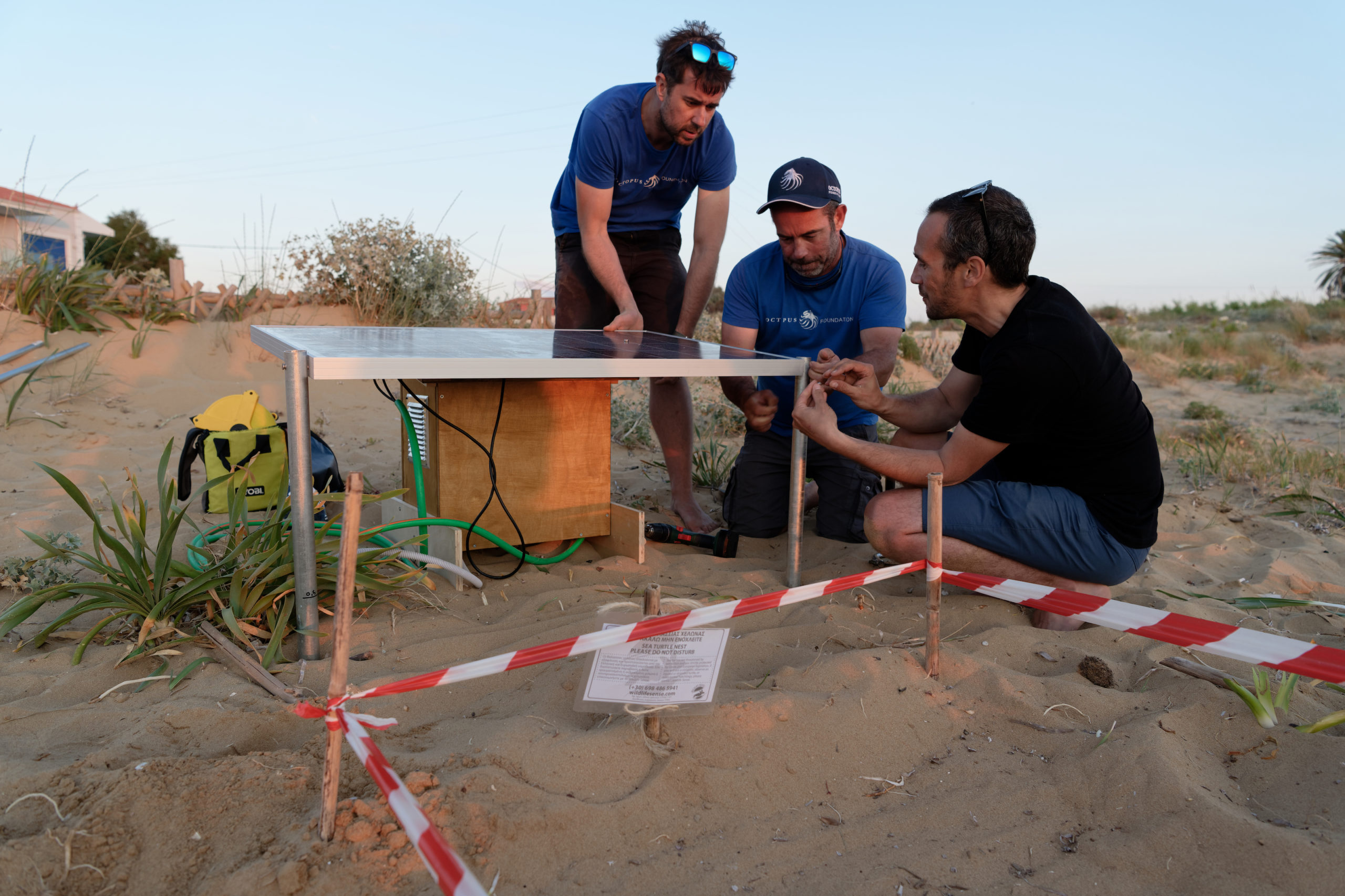 That way, the buried electronics are only powered on when needed, and can’t heat up the sand which could be detrimental to the eggs located right next to the LED lights. It is crucial that our equipment doesn’t further jeopardize the survival of the hatchlings.
While awake, the buried Raspberry Pi records the data (a photo, a temperature and a humidity reading) on a USB key, as well as transmits it to a remote FTP server through the 3G router. This “live” transmission of data also allows the biologists who collaborate on the project to be able to study the images and readings from anywhere and at any time while the system is broadcasting.
Below you can see the results of the first trial run, which took place in June 2023 in the South of Kefalonia. This particular nest was relocated due to the presence of dune plants. Their root systems are so efficient in the collection of humidity, that they can fatally dry up the nest and its eggs.
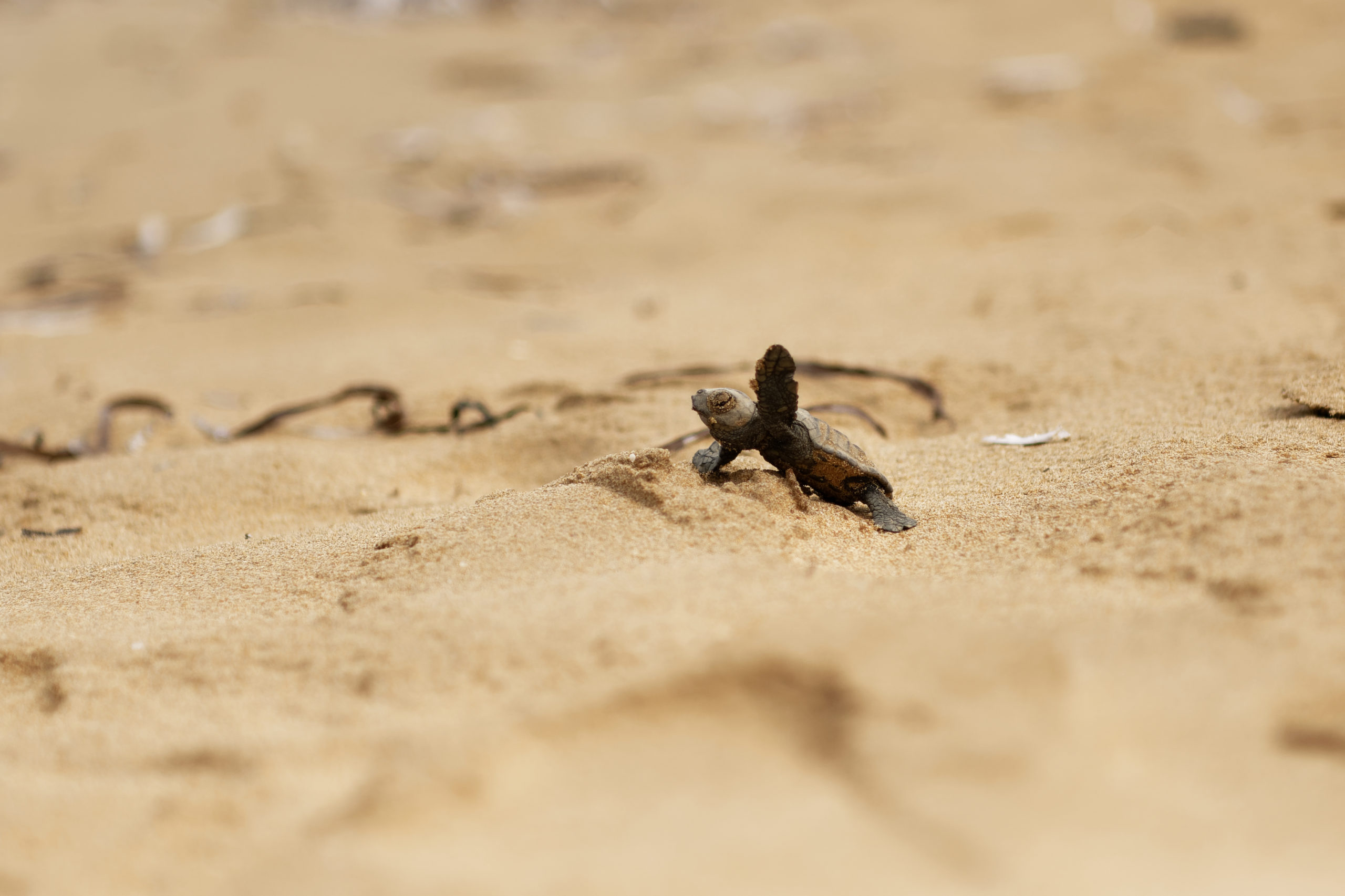
In this one-minute time-lapse (video), it is possible to observe the development of eggs, the appearance of a root, significant condensation just after a heat wave that lasted 14 days in Greece (from mid-July to the end of July 2023), and finally the eggs hatching in early August, 55 days after laying.
We can also conclude that the temperature sensor worked perfectly, because our recordings matches the data readings by a micro-sensor placed by the Wildlife Sense teams in the nests they move.
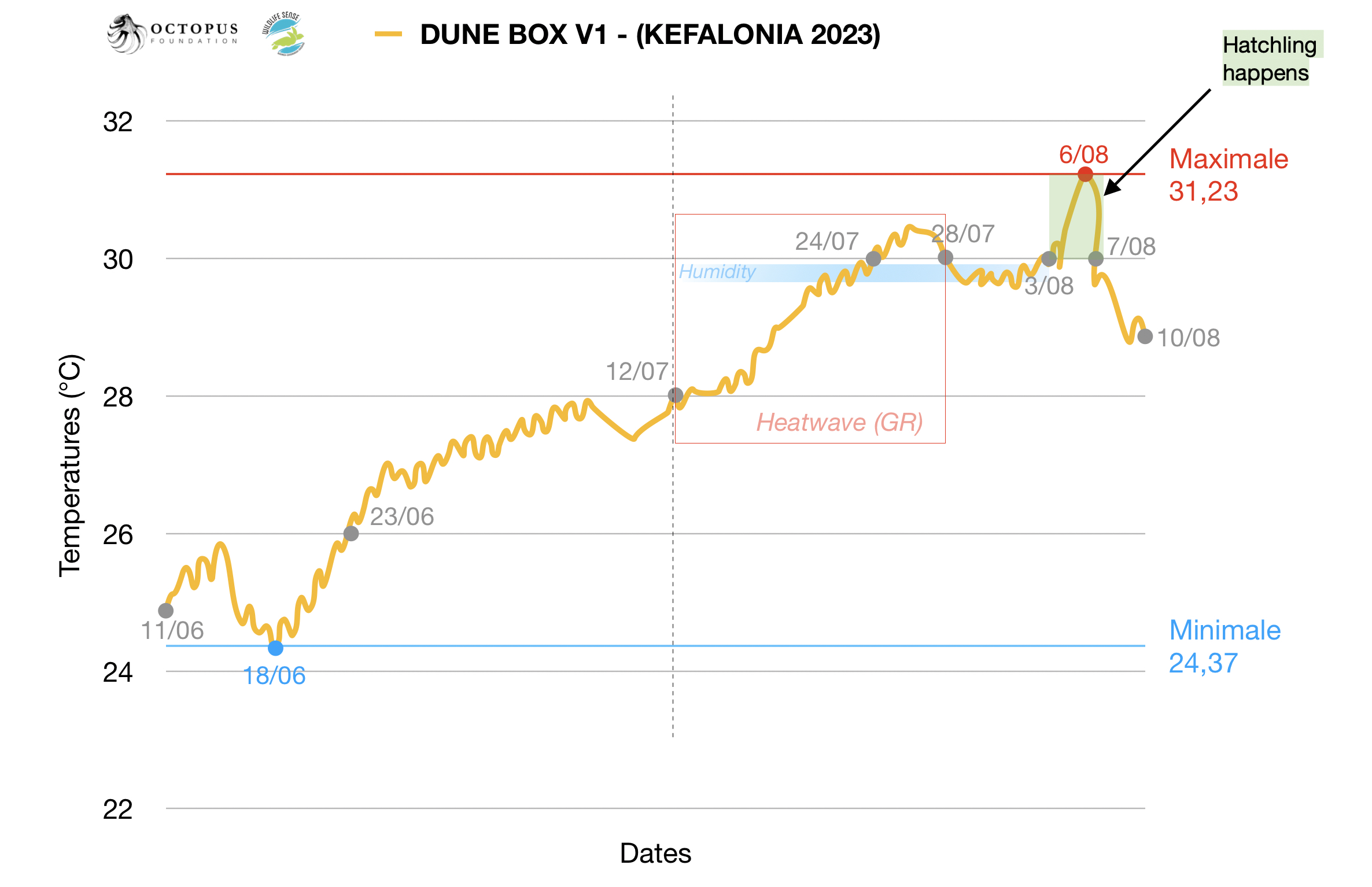
Finally and unfortunately, we weren’t able to get a suitable humidity reading. The sensor was saturated after a few hours in the sand, and it kept reading the maximum (100%) because it couldn’t dry up. We are working on this technical issue to try to find a solution for future monitoring.
###
Location
2025 results
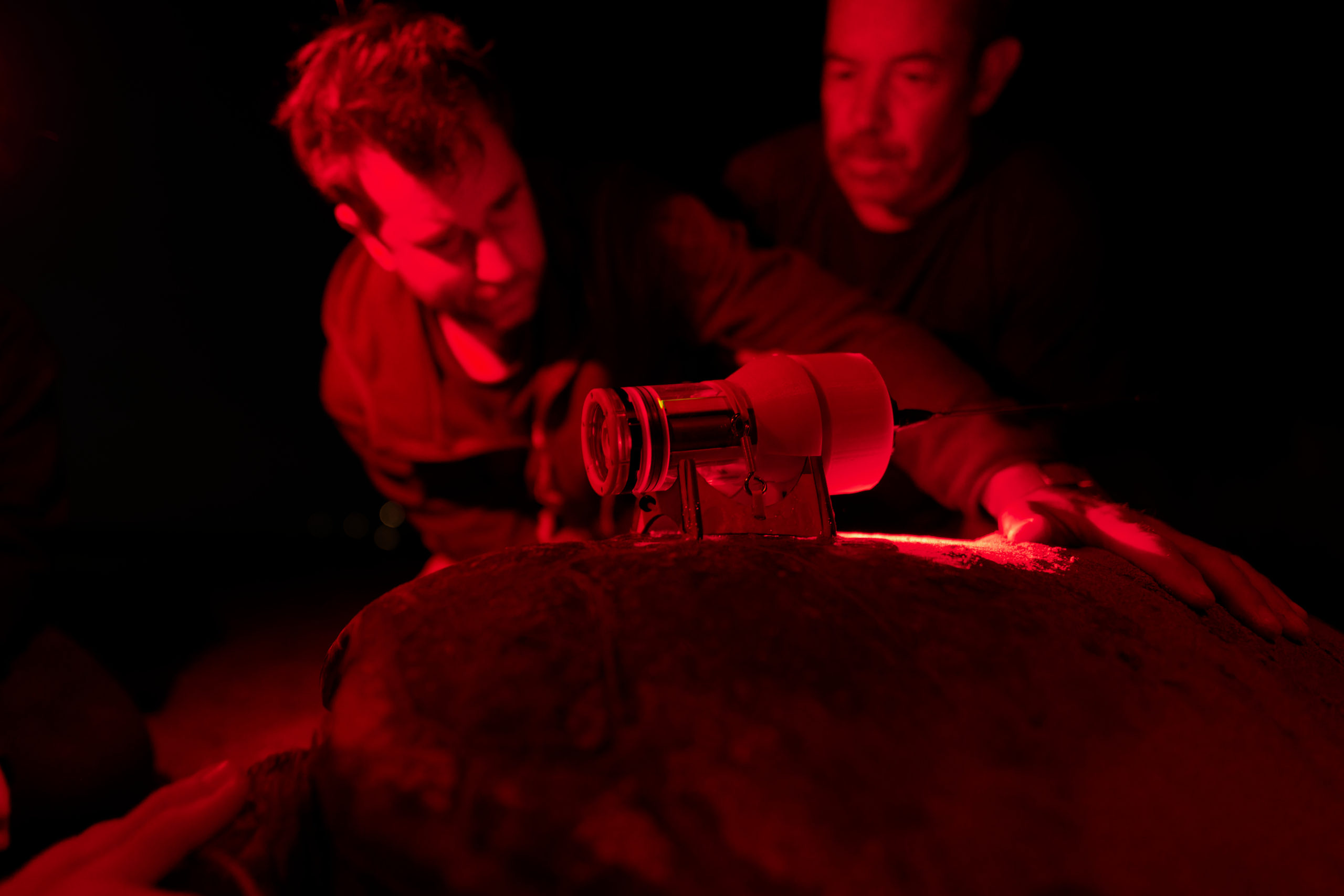
a) During the 2025 field mission in Greece, the first REMORA V2 deployment took place on the night of June 9th at midnight on the beach of Megas Lakos, in the southwest of the island of Kefalonia. The turtle was a loggerhead sea turtle (Caretta caretta), named “Marilyn,” with a carapace length of 81 cm and an estimated weight of just over 50 kg. That night, Marilyn laid 96 eggs in the nest she had dug over more than two hours.
>> At 12:20 a.m., “Marilyn” returned to sea with the REMORA Unit 6 attached to its back. The beacon detached around noon, after recording 11 hours and 30 minutes of video. At 1:20 p.m., in calm weather, the Octopus team received the GPS coordinates of the first location transmitted by the ARGOS satellites. At 2:45 p.m., one hour and 15 minutes later, the Octopus team recovered the beacon by boat. Unfortunately, the local search (within one kilometer of the beacon) using the LoRa module and its directional antenna was unsuccessful.
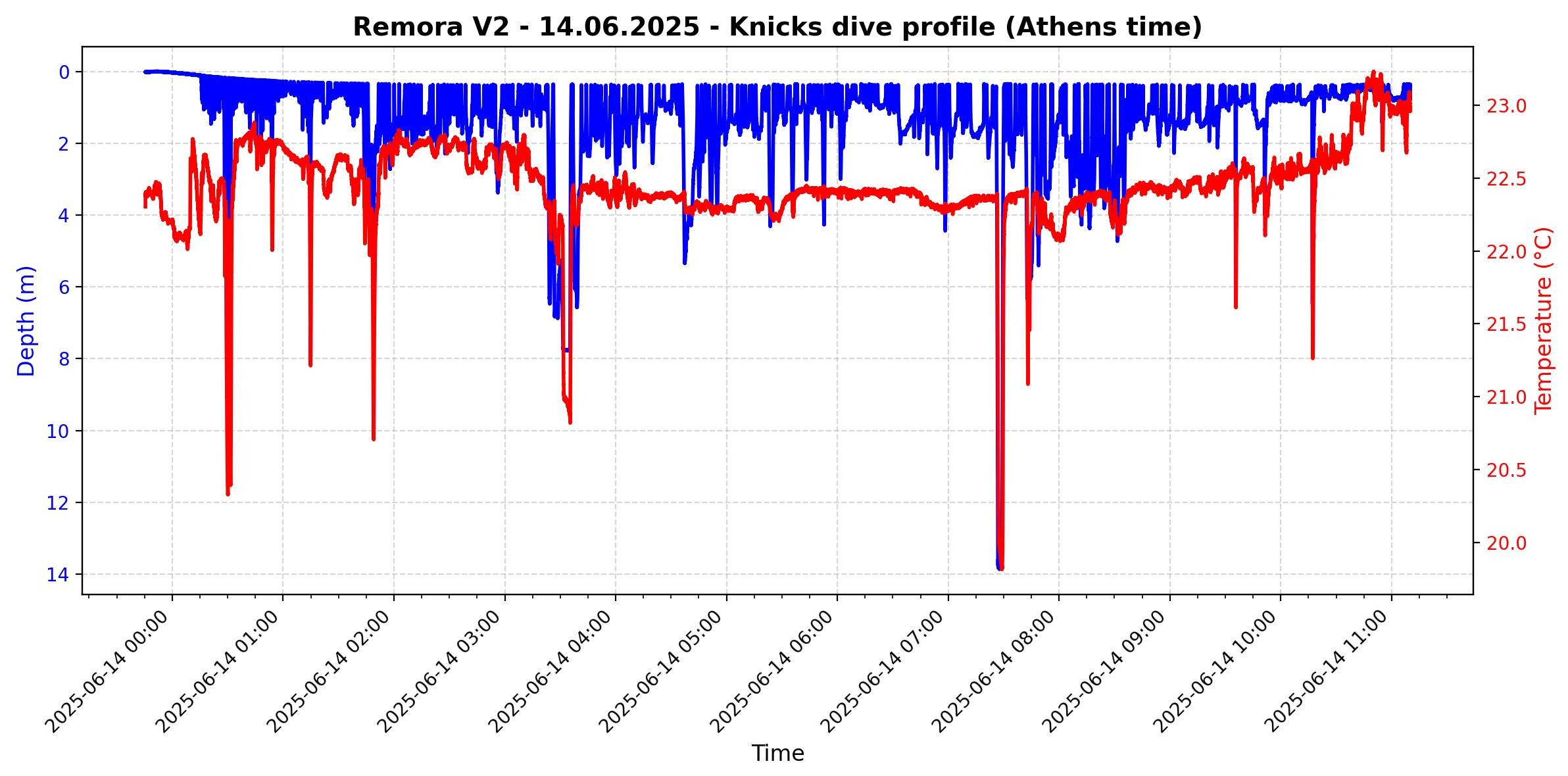
b) The second REMORA V2 deployment took place on the night of June 13th at midnight, again on Megas Lakos beach. The turtle was also a loggerhead sea turtle (Caretta caretta), named “Knicks,” with a carapace length of 74 cm and an estimated weight of approximately 40-45 kg. Knicks laid 115 eggs before we installed the REMORA Unit 6 on her shell.
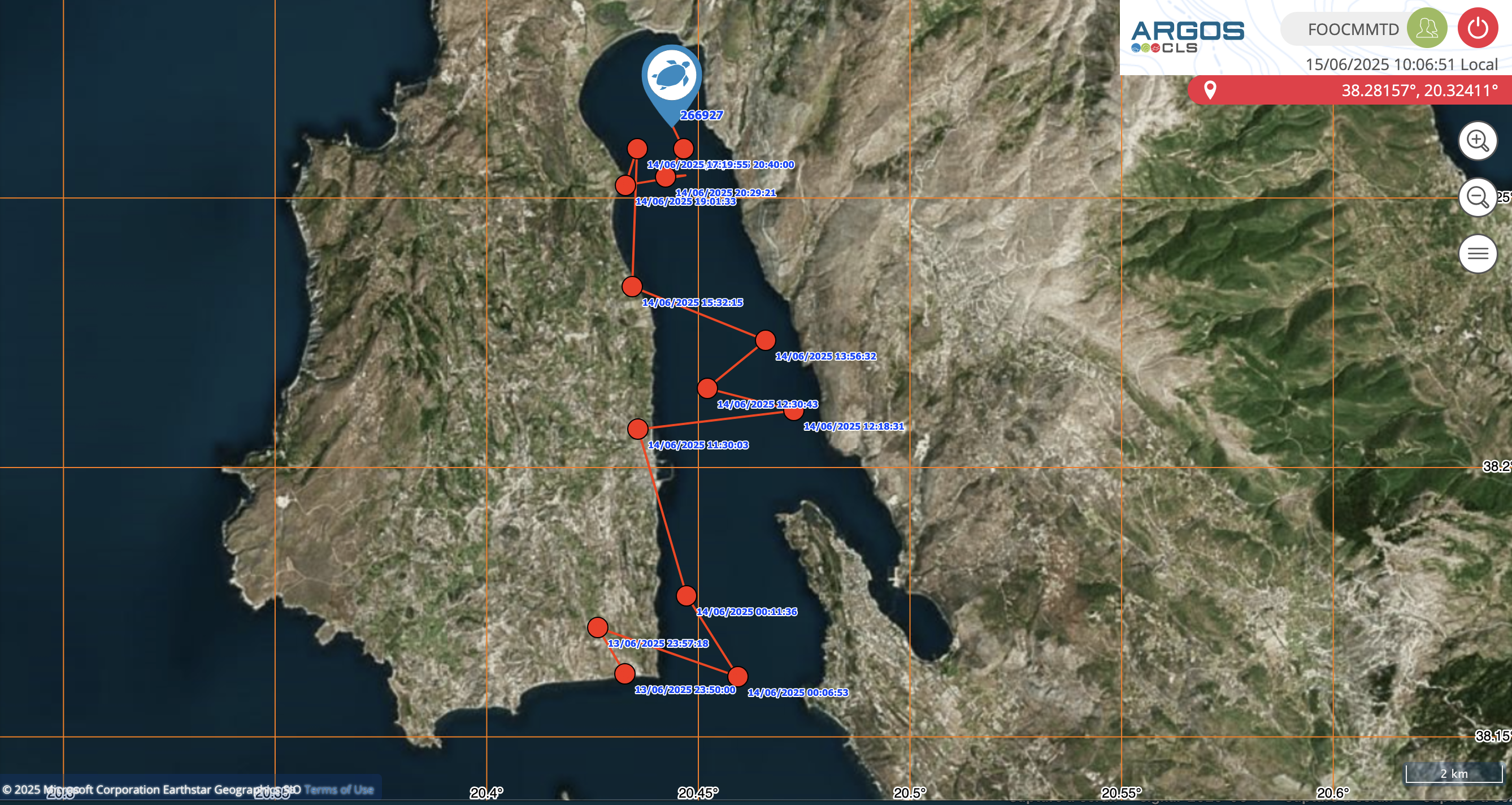
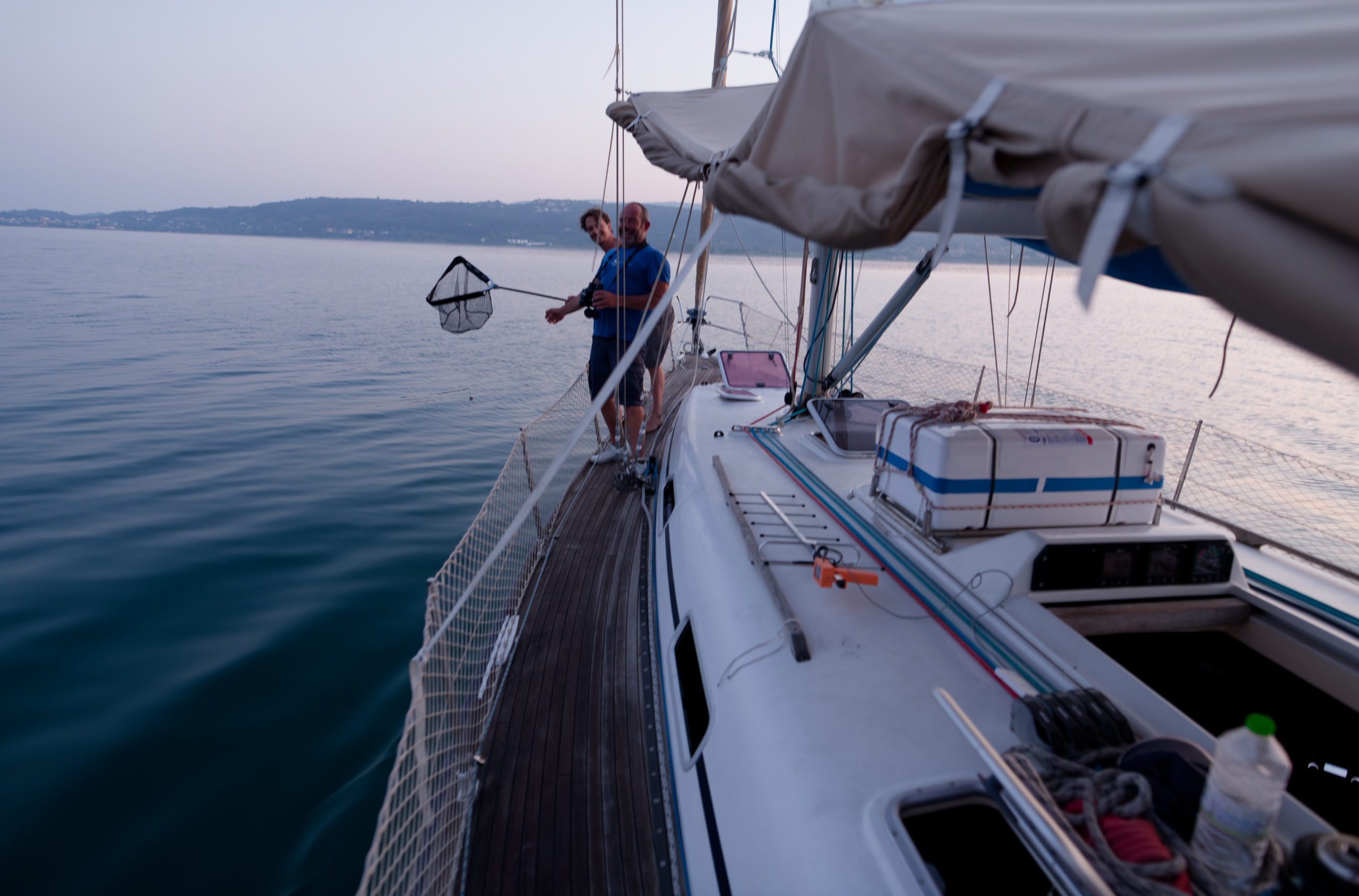
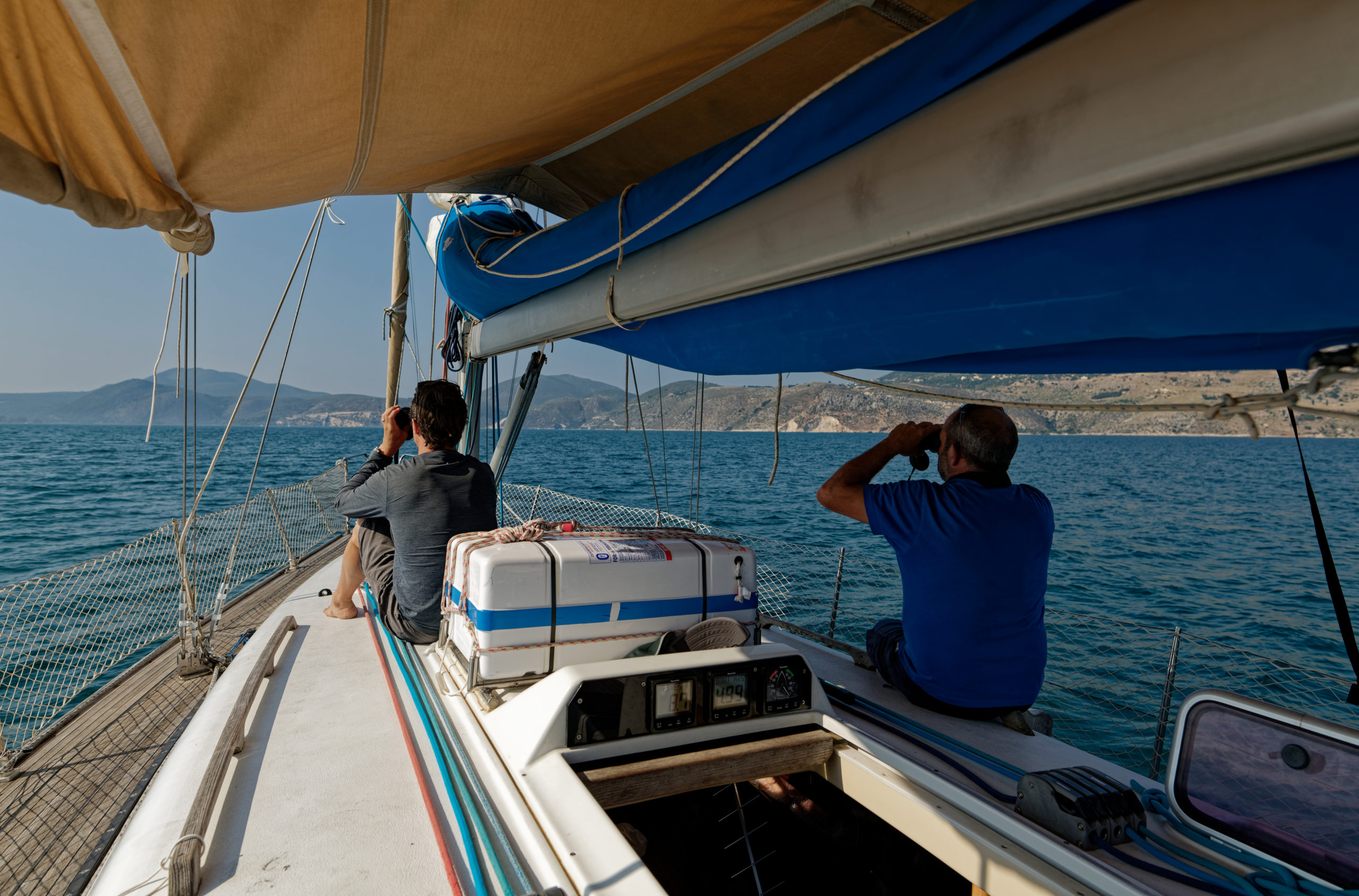
>> At 12:15 a.m., “Knicks” went back out in the sea. The beacon detached at 11:20 a.m., after recording 11 hours and 10 minutes of video. At 11:30 a.m., the Octopus team received the first ARGOS Doppler signal (less precise than a GPS position). The search for the beacon by boat then began. After an afternoon of moderate thermal breeze (approximately 15 knots from the Northwest) with small waves, calm weather returned in the evening around 7:00 p.m. From their boat, the Octopus team received ARGOS Doppler signals throughout the day, but these did not allow them to locate the REMORA. At 8:30 p.m., the team finally received a precise GPS position. The beacon was recovered 45 minutes later (at 9:15 PM), a few minutes before sunset. A local search (within a kilometer radius) using the LoRa module and its directional antenna also failed.
Successes and difficulties
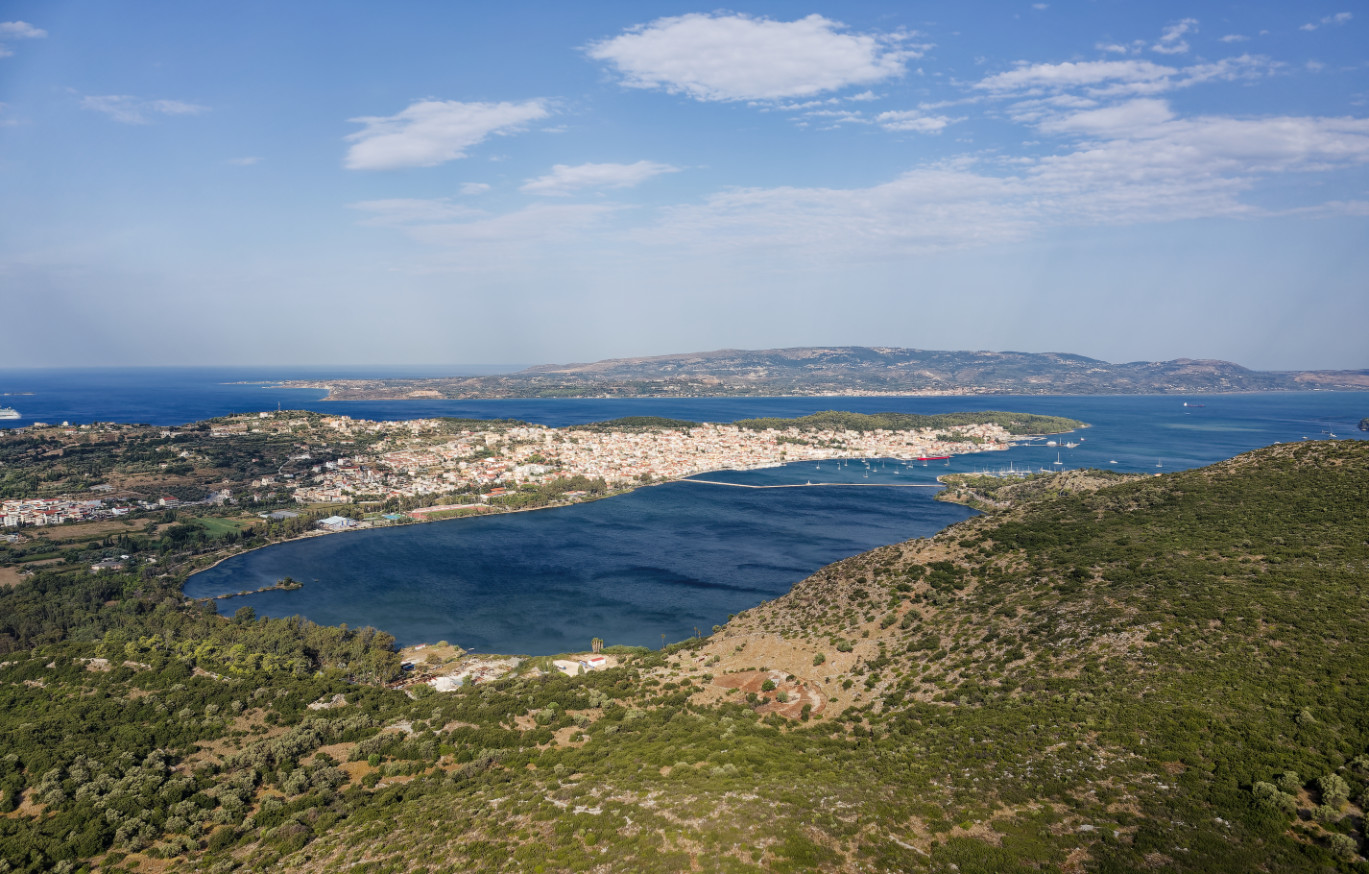
In 2023 and 2024, the first REMORA deployment tests took place in the Argostoli Lagoon, a semi-enclosed environment separated from the open sea by a stone bridge with a few openings that turtles use to enter and exit. Turtles typically stay there for several weeks or even months because food is plentiful and the shallow depth (less than four meters) means the lagoon water is warmer than the sea. When the REMORA detaches from the turtle, there is a high probability that the tag will remain trapped in the lagoon, facilitating its retrieval.
The June 2025 mission marked a new milestone for REMORA. The two turtles fitted with the tag were adult females who had come to lay their eggs on the beaches south of Kefalonia Island. Because these beaches are open to the open sea, the turtles could have ventured farther and reached greater depths than the lagoon. However, we had a hunch that the turtles would remain relatively close to the coast, as they typically lay two to three nests every two weeks during the summer. This proved to be the case in both instances, as we recovered REMORA in the large Argostoli Bay (14 km long by 3 km wide), where the turtles rest and feed between nesting periods in depths of less than 20 meters.
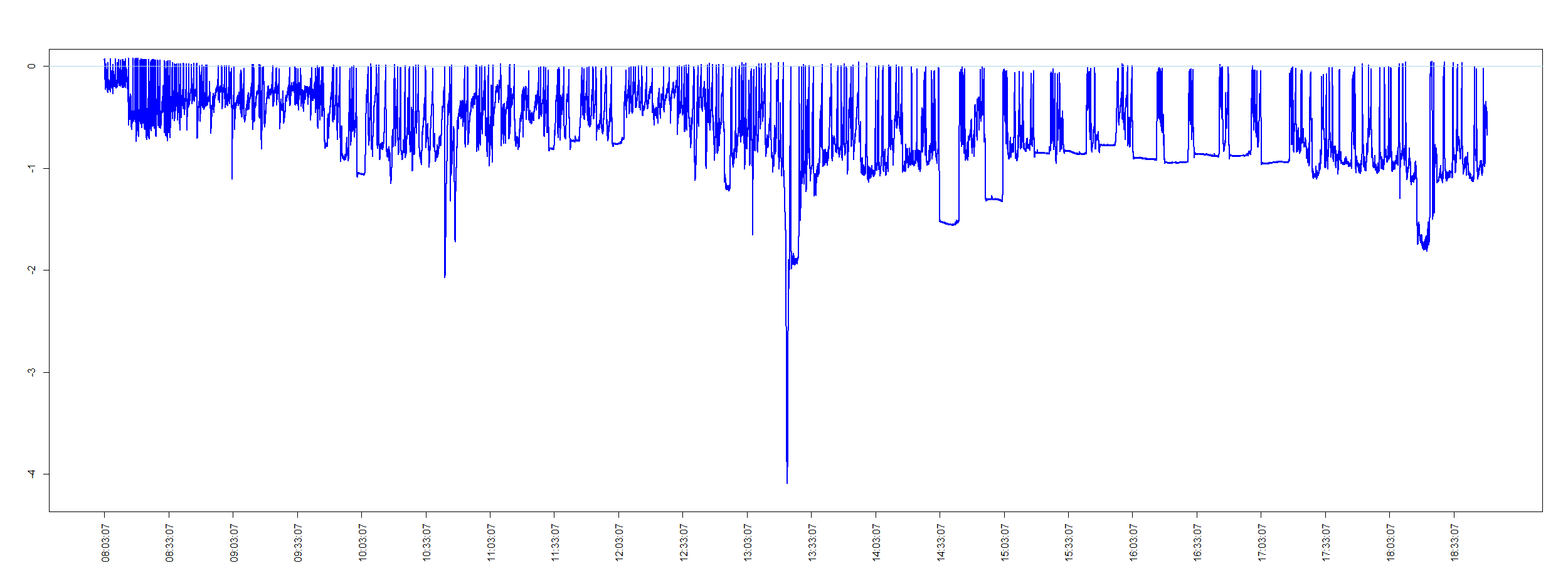
In both cases, the REMORA functioned technically well, with continuous video recordings of over 11 hours, along with data from various sensors (inertial measurement unit and pressure and temperature sensors), ARGOS Doppler and GPS positioning with satellite transmissions of these points, and boat recoveries before the communication battery ran out. The only technical drawback was that local positioning with the LoRa module and its directional antenna did not work.
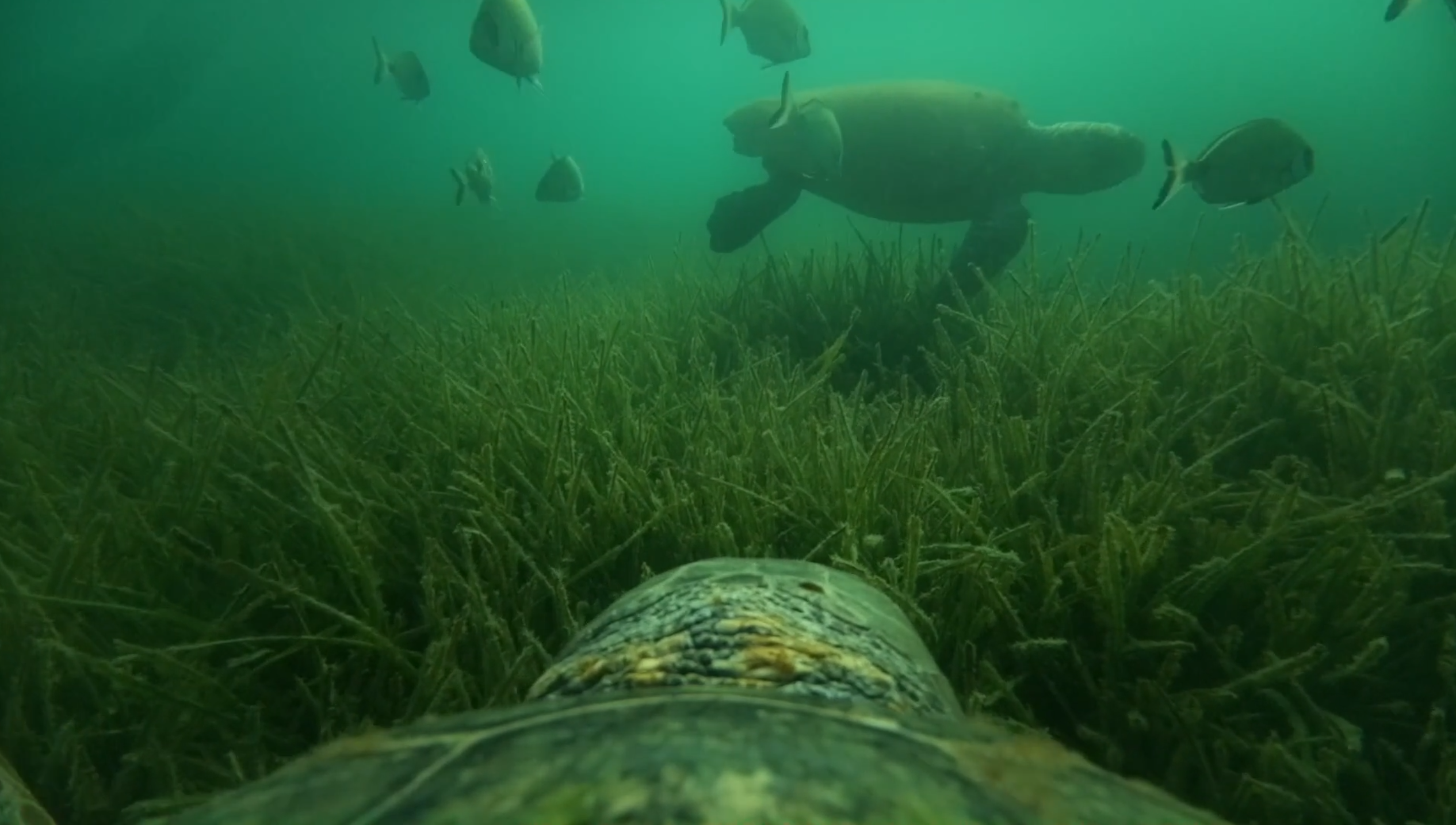
However, further R&D and technical improvements enabled LoRa to become operational in October 2025, significantly increasing its range from one kilometer to several kilometers. While some tests remain to be conducted before the end of 2025, REMORA V2 will soon be fully operational for the final testing phase: a healthy, well-treated turtle will be released back into the open ocean at great depths (over 20 meters).
This final stage was scheduled to take place around the island of Lampedusa in July 2025. Unfortunately, the care center with which Professor Paolo Casale works did not receive any turtles accidentally caught by fishermen that were large enough to be fitted with the REMORA V2 tag (turtles weighing over 35 kg). Furthermore, the weather was particularly bad during the week planned for this final test. It was agreed with the center’s director and biologist, Daniela Freggi, that we would postpone this most complex test until the summer of 2026, as all the elements of the tag and its location system must function perfectly. Not only must the ARGOS/GPS module transmit precise positions (which implies calm and favorable weather), but the LoRa module with its directional antenna must also be functional. Once offshore, the probability of losing cellular network coverage is very high, preventing us from receiving updated REMORA positions on the ARGOS online platform. We will then rely solely on LoRa to locate the device.
The two tests conducted in Kefalonia in June 2025 allow biologists to better understand how adult female turtles recover during the hours following the laying of a hundred eggs, at what rhythms they feed and rest, how they interact with other turtles that are in the same area, and how they move around the fish farms located in Argostoli Bay.
Location
Working closely with Italian and Greek biologists, the Octopus Foundation is developing new open-source tools to gather unprecedented information about sea turtles. By better understanding these animals, specialists will be able to propose effective protection measures. Here are the images filmed during this project:
REMORA – 2025, Knicks
REMORA – 2025, Marilyn
REMORA – 2025, Zenis
REMORA – 2024, Capulet
REMORA prototype – 2023
DuneBox 2024 – 55 days in a turtle nest
DUNEBOX prototype – 2023
Location
Team members
Julien PFYFFER
Founder and chairman

Sebastien ROUSSEAU
Navigation manager

Philippe HENRY
Director of Photography
Thomas Delorme
Documentary director
Andy GUINAND
Head of robotics
Antoine BUGEON
Cartoonist and sailor

Cédric GEORGES
Diving instructor

Quentin ORHANT
Maker - robotician
Partners

Universita di Pisa
Lampedusa Turtle Rescue

Wildlife Sense

Kosamare

Smilewave fund
Swiss fund
Gallery