Donate

The Eagles’ wreck (Switzerland, 2025 – 2026)

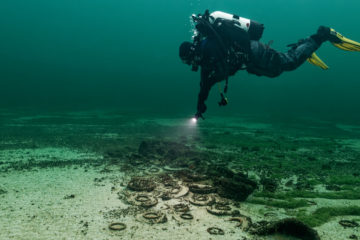
In November 2024, an exceptional shipwreck was discovered at the bottom of Lake Neuchâtel. It contained a miraculously preserved cachet of pottery, weapons, tools, and harness parts related to horse-drawn transport. Dating from the early Roman Empire, could this cargo be linked to the Roman legions’ deployment along the Rhine, facing the perilous Germania?
The port of ancient Eretria (Greece, 2024 – 2026)

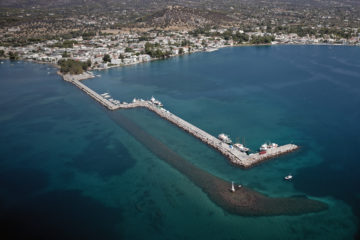
Located on the island of Euboea, Eretria is one of the first major cities of Classical Greece, having emerged around 700 BC. This important site has been excavated on land since 1964 by generations of Swiss and Greek archaeologists. However, the city’s underwater remains has never been explored, starting with its port, now largely submerged. Yet, it is of great importance, as Eretria means “city of the rowers.”

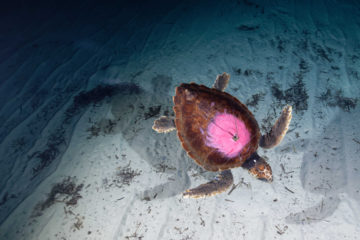
The sentinels of the Mediterranean (Italy & Greece, 2023 – 2025)

Turtles have roamed the oceans for hundreds of millions of years. In the coastal waters or the open sea of the Mediterranean, the survival of loggerhead (Caretta caretta) and green sea turtles (Chelonia mydas) is threatened by human activities. The Octopus Foundation has launched an innovative program to better understand these reptiles, in order to better protect them.

Prehistoric villages in Neuchâtel (Switzerland, 2023)

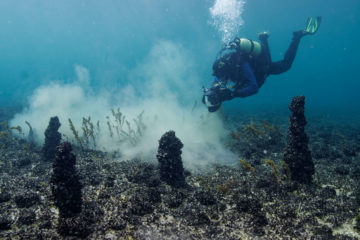
5000 years ago, men built wooden villages on the shores of alpine lakes. These “pile-dwellings” were eventually abandoned, their remains quickly covered by sediments deposited by rising water levels. Isolated from the air, fragile material such as wood has remained intact, representing an incredible source of information on the way our very distant ancestors lived. Today, some archaeological sites could be threatened by the joint effects of natural erosion and human activities.

The Mediterranean Monk Seal (Greece, 2018 – 2022)

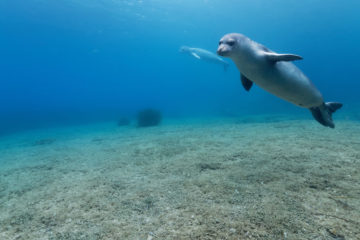
The Mediterranean monk seal is on the “endangered species” section of the IUCN’s red list since 1986. Its population is down to only a few hundred individuals, mainly concentrated in Greece and Turkey.
This marine mammal has been hunting in Mare Nostrum since the Antiquity. Yet, it’s still one of the least known and studied seals in the world. The Octopus Foundation joins a program aimed at better understanding this key species.

Des archéologues plongeurs inspectent les stations palafittiques de Léman inscrites au Patrimoine Mondial de l'UNESCO -

Prehistoric villages in Geneva (Switzerland, 2022)

5000 years ago, men built wooden villages on the shores of alpine lakes. These “pile-dwellings” were eventually abandoned, their remains quickly covered by sediments deposited by rising water levels. Isolated from the air, fragile material such as wood has remained intact, representing an incredible source of information on the way our very distant ancestors lived. Today, some archaeological sites could be threatened by the joint effects of natural erosion and human activities.