Our partners at WildLife Sense in Greece have deployed the Dunebox prototype for the second consecutive year.
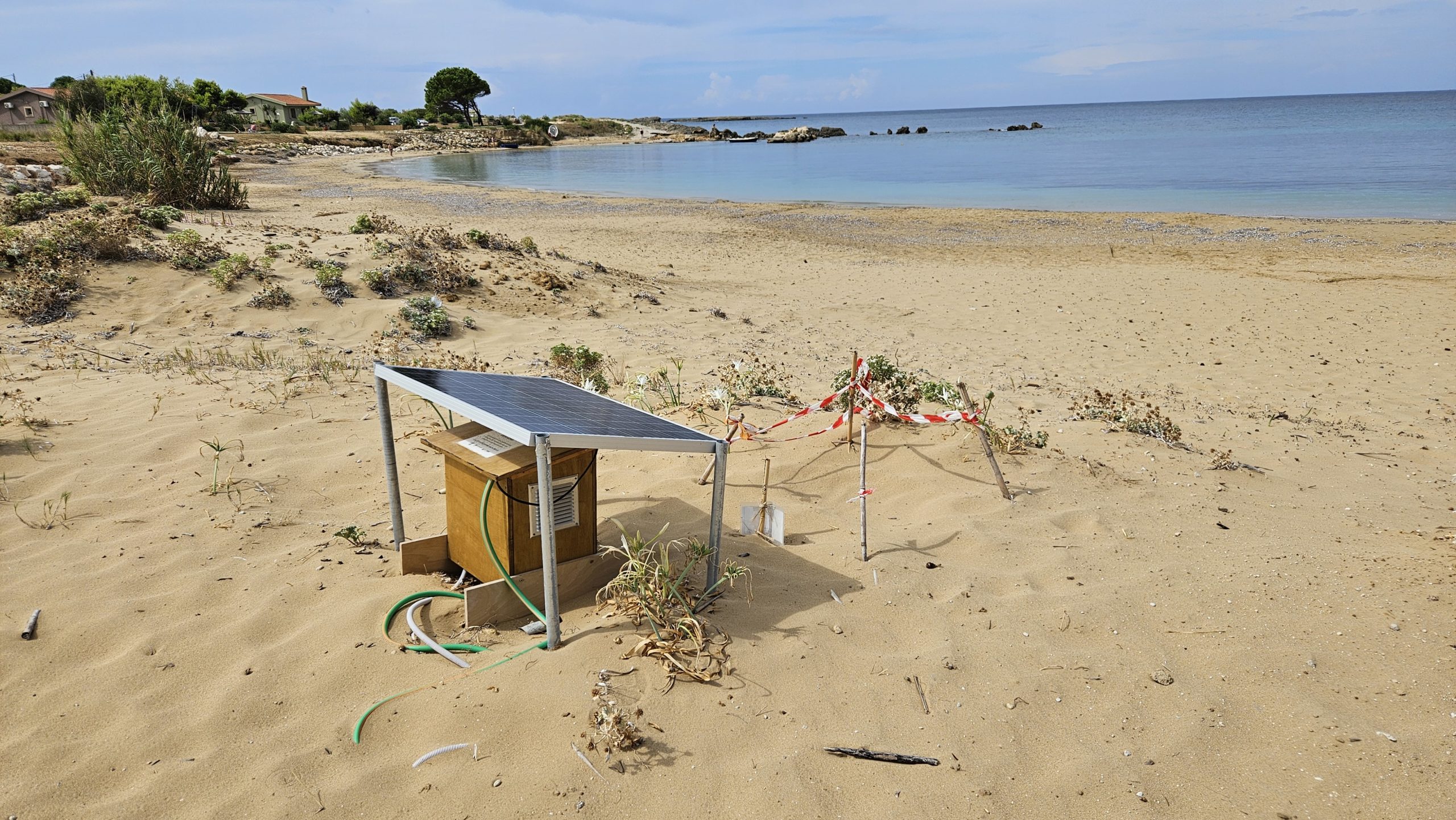
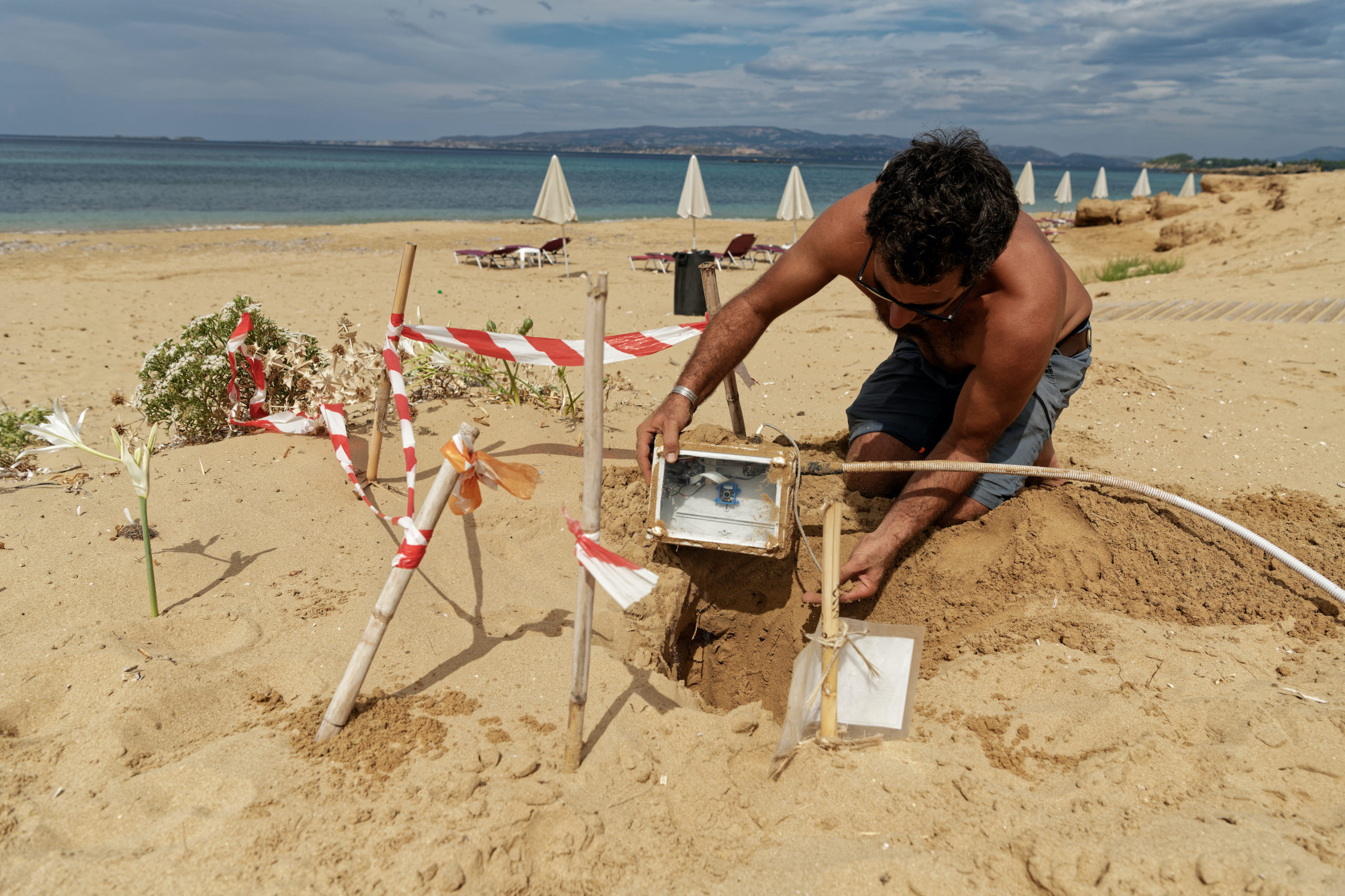
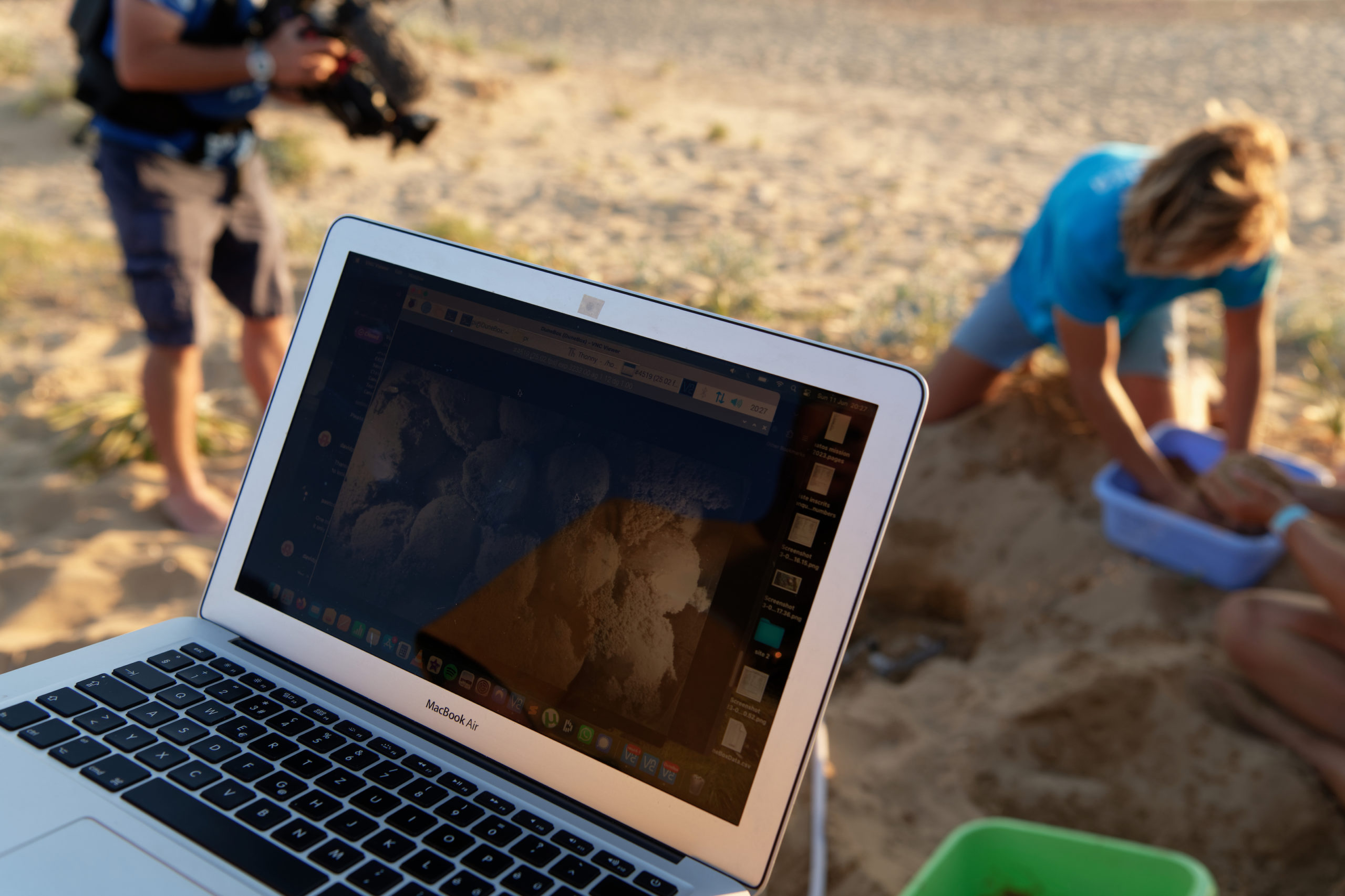
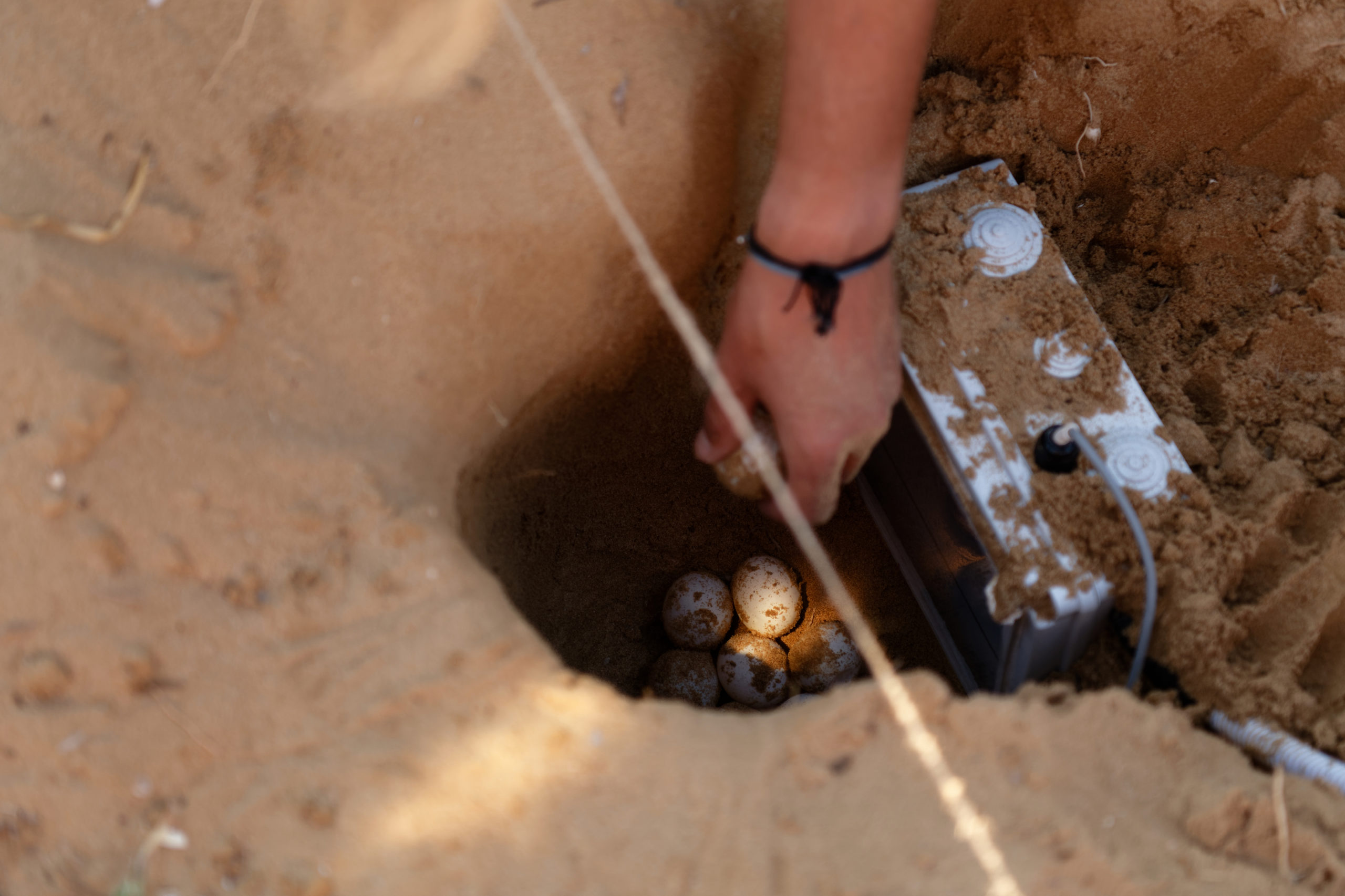
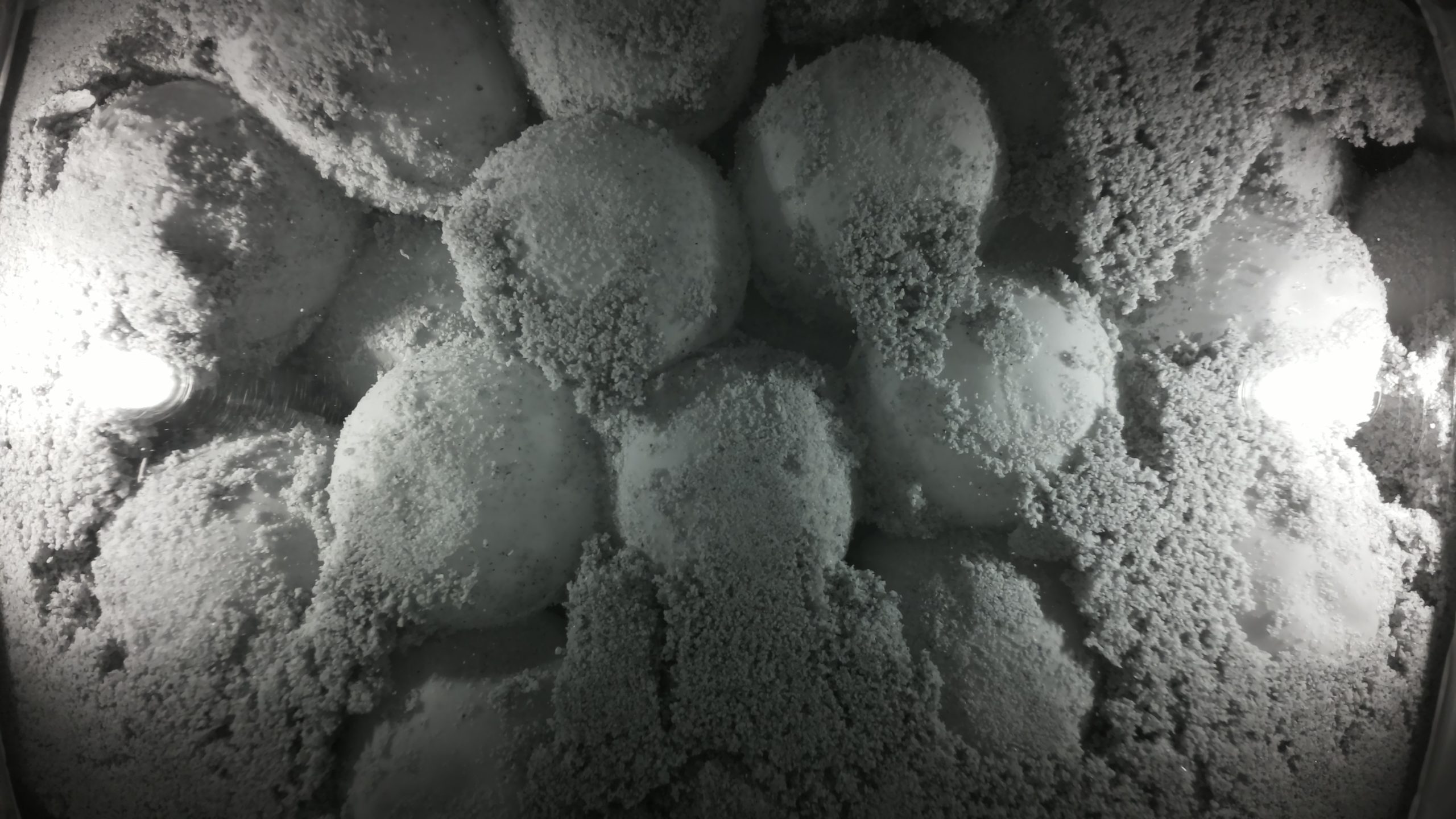
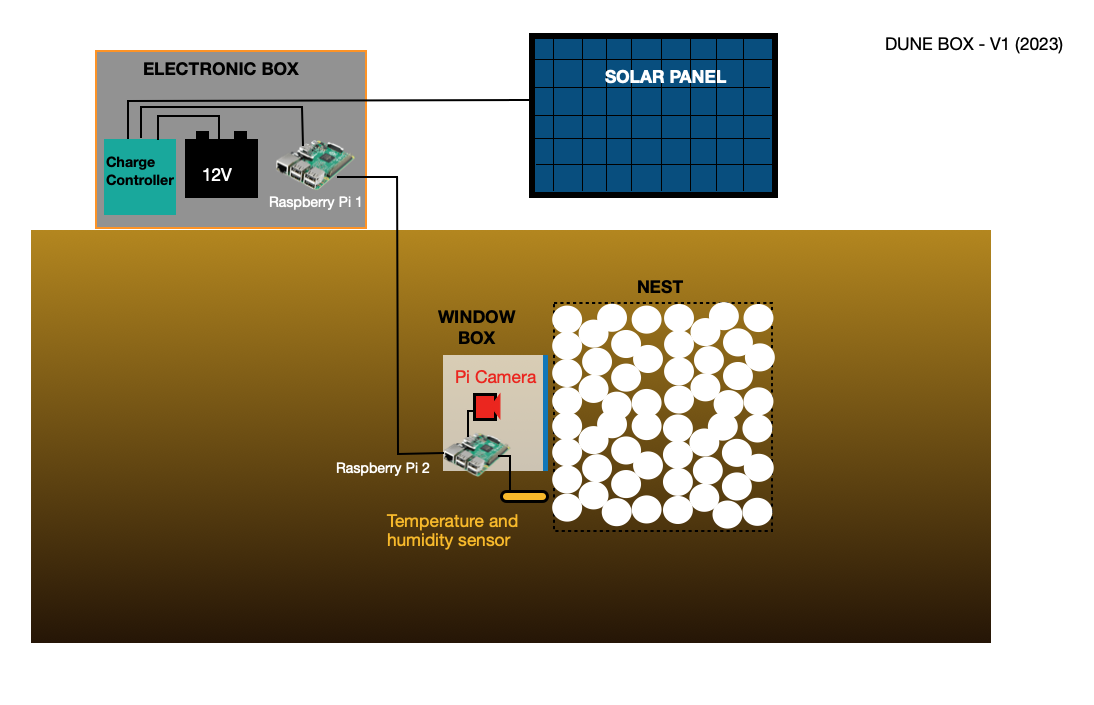 The infrared camera was buried in the sand on Megali Ammos beach, in the south of Kefalonia Island. Then, loggerhead turtle eggs from a threatened nest were carefully relocated in a new hole in the sand, next to the camera.
The aim of the operation is to learn more about the maturation of a sea turtle nest, in relation to external elements such as the temperature and humidity of the sand or the wild plants that grow on the beach.
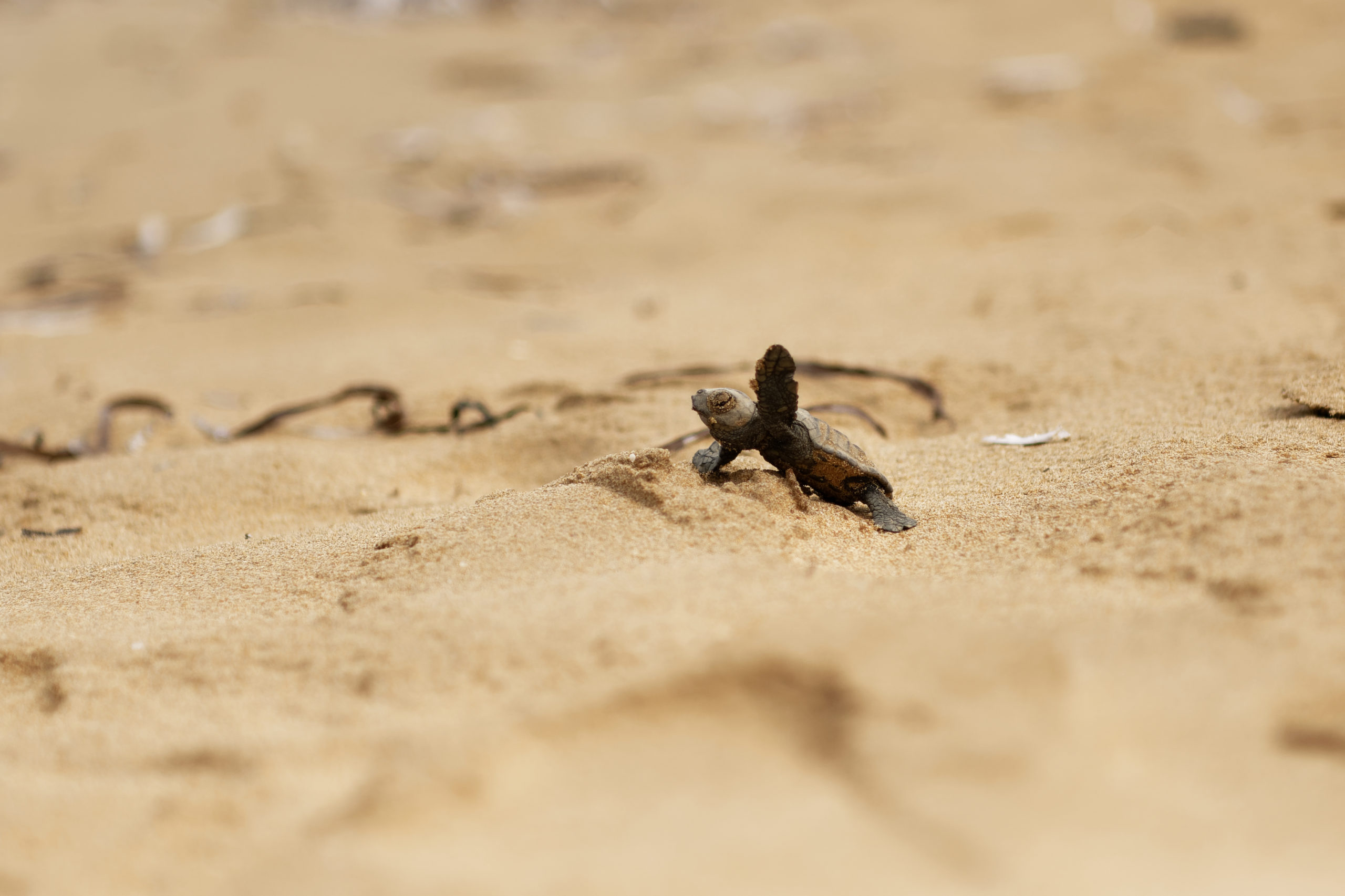
On average, hatching occurs about 55 days after the eggs are laid. For the first time, and without disturbing the animals, scientists can observe this phenomenon in the wild. They can, for example, study how baby turtles break their shells with their beaks, or how some can emerge very quickly while others take up to five days to reach the surface.
Unfortunately, during this experiment, a cable came loose inside the box and partially obstructed the lens for most of the test, hindering vision. As this is a prototype, we have learned from this experience and will improve the system in future tests.
The result can be seen in the timelapse video below: